Related
Related Books


Reviews
Reviews
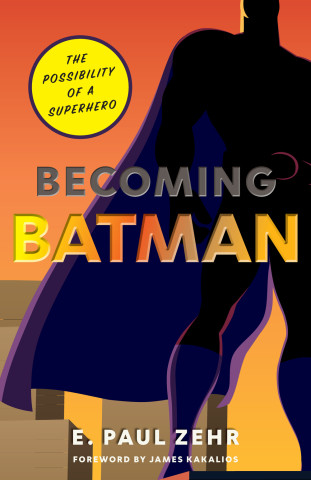
As a kid, I wanted to be Batman but always ended up more like the Joker. I only wish I could have read Dr. Zehr's fascinating book then, so that I would have known exactly what it takes to become a real superhero.
Zehr applies his specialised knowledge to quantify how an ordinary person could turn themselves into Batman.
As a study of human physiology, this detailed and accessible discussion could appeal to Batman fans and those interested in intensive physical training who are prepared for serious science rather than fantasy. But Batman is only the scaffolding on which Zehr hands his detailed look at the role of genetic makeup, diet, strength training and development of motor skills in attaining the 'outer limits' of physical performance.
Charming book... There is really nothing more awesome than reading a book that cites obscure neuroscience journals in the same sentence with citations to obscure Batman comics.
Zehr evaluates what it would take—physically, psychologically, and scientifically—to replicate Batman's actions and become a self-made superhero. His conclusions are sometimes surprising, and often fascinating.
A wonderful book that looks at what it would really take to become Batman in today's world.
This is a thoughtfully imagined work that uses escapism to make solid scientific points that can benefit almost anyone. And for those who aspire to don a cape and cowl, it's essential reading.
Two black-gloved thumbs way up!
The author maintains a humorous and enjoyable tone throughout this book while providing general audiences with proven scientific methods and useful facts about the resilience and limitations of the human body.
A highly researched, very fairly reasoned and considerably factually-supported tome that not only discusses the potential for the most human of super heroes, also educates us in quite some depth about the limit of human existence and physical and mental prowess. That Dr. Zehr manages to add any style to his efforts (and let's be fair, scientists aren't known for their 'suave'), is a credit to the man and a credit to his obvious enthusiasm for his work and interests.
Terrifying mastery of the entire Batman mythohistoriography.
Becoming Batman is your next step to supercool.
The author knows whereof he writes... written in an accessible and appealing manner.
Not only is it enjoyable as a popular science book for those with even the smallest Batman obsession, it could be an entertaining way to introduce human movement science to potential students.
Becoming Batman takes the escapism of the Caped Crusader and puts it in real-world, grounded, scientific terms that is extremely entertaining and interesting. If you’re not careful, you might learn something.
witty and informative, striking an appropriate balance between a pure scientific discourse and ample explanations to keep lesser trained readers intrigued.
If there's one thing that has influenced the new stuff, the 'Batman, Inc.' stuff, it's a book called Becoming Batman: The Possibility of a Superhero, which is written by E. Paul Zehr. It's a guy who is a doctor, and looking into the actual possibility of Batman and what it would take to be that person in real life: What it would do to your muscles and what it would do to your head, and how long it would take to learn the martial arts. And it's really quite fascinating, this idea of the real facts behind it.
When I walk, every once in a while someone notices they can't hear my footsteps. Do you know why? Dr. E. Paul Zehr knows. I'm training to become Batman. Most of the population wouldn't understand this... but beneath and entwined in the soul of many men is a hero-in-the-making. Training for that moment that will, thankfully, never come. The moment when he must be a hero. The moment he trained for. They'll never hear me coming. In this book Dr. Zehr knows exactly what our giddy souls are doing. Here he tells our secret.
If you really want to become Batman, having a billion dollars in start-up funds and a subterranean lair is just the beginning. Dr. Zehr's thoroughly researched and thoughtfully imagined exploration into the real-life rigors of costumed crime-fighting shows just how DC Comics' Dark Knight—the original self-made hero—could realistically transform a mere human body into something no less than superhuman. Consider it required reading for anyone seriously contemplating donning cape and cowl.
About
Book Details
Publication Date
Status
Preorder
Trim Size
5.5
x 8.5
Pages
320
ISBN
9781421455433
Illustration Description
4 halftones, 51 line drawings
Subject
Table of Contents
Foreword, by James Kakalios
Preface
Part I: Bat-Building Blocks
1. The "Before" Batman: How Buff Was Bruce?
2. Guess Who's Coming for Dinner: Bruce's Twin Brother, Bob, and the Human Genome
3. The Stress
Foreword, by James Kakalios
Preface
Part I: Bat-Building Blocks
1. The "Before" Batman: How Buff Was Bruce?
2. Guess Who's Coming for Dinner: Bruce's Twin Brother, Bob, and the Human Genome
3. The Stress of Life: Holy Hormones, Batman!
Part II: Basic Batbody Training
4. Gaining Strength and Power: Does the Bat That Flies the Highest or the Fastest Get the Worm?
5. Building the Batbones: Brittle Is Bad, But Is Bigger Better?
6. Batmetabolism: What's for Dinner on the Dark Knight Diet
Part III: Training the Batbrain
7. From Bruce Wayne to Bruce Lee: Mastering Martial Moves in the Batcave 101
8. Everybody Was Kung Fu Fighting: But What Was Batman Doing?
9. The Caped Crusader in Combat: Can You Kayo without Killing?
Part IV: Batman in Action
10. Batman Bashes and Is Bashed by Baddies: What Can He Break without Getting Broken?
11. Hardening the Batbody: Can Sticks and Stones Break His Bones?
12. Gotham by Twilight: Working the Knight Shift
Part V: A Mixed Batbag
13. Injury and Recovery: How Much Banging until the Batback Goes Bonk?
14. Battle of the Bats: Could Batgirl Beat Batman?
15. The Aging Avenger: Could the Caped Crusader Become the Caped Codger?
16. The Reign of the Bat: Can You Really Become Batman and Remain Batman?
Appendix: Batman's Training Milestones
Bibliography
Index

Featured Contributor
E. Paul Zehr, Ph.D., M.Sc., B.P.E.
E. Paul Zehr was a professor of neuroscience and kinesiology at the University of Victoria, British Columbia. He is the author of Inventing Iron Man: The Possibility of a Human Machine, Chasing Captain America, and Project Superhero. He holds black belts in both empty hand and armed Japanese, Okinawan, and Chinese martial arts.
Resources
