Johns Hopkins UniversityEst. 1876

America’s First Research University

Back to Results
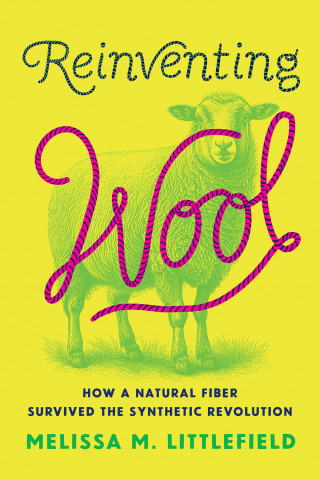
Cover of "Reinventing Wool" by Melissa M. Littlefield, featuring neon yellow background, green sheep illustration, and pink rope-style script text.
Preorder
Cover of "Reinventing Wool" by Melissa M. Littlefield, featuring neon yellow background, green sheep illustration, and pink rope-style script text.
Share this Title:

Reinventing Wool

How a Natural Fiber Survived the Synthetic Revolution

Melissa M. Littlefield

Publication Date
Binding Type

How chemistry, culture, and industry remade a natural fiber—and reshaped our closets.

Wool once shaped daily life in the United States. The ubiquitous textile clothed soldiers and filled civilian wardrobes; sheep even grazed on the White House lawn. Today, however, wool apparel represents a sliver of the global textile market. In Reinventing Wool, Melissa M. Littlefield uncovers the surprising story behind this dramatic shift.

Rather than fading quietly as synthetics rose to prominence, wool became the focus of a sweeping mid-twentieth-century effort to "modernize" natural fibers through...

How chemistry, culture, and industry remade a natural fiber—and reshaped our closets.

Wool once shaped daily life in the United States. The ubiquitous textile clothed soldiers and filled civilian wardrobes; sheep even grazed on the White House lawn. Today, however, wool apparel represents a sliver of the global textile market. In Reinventing Wool, Melissa M. Littlefield uncovers the surprising story behind this dramatic shift.

Rather than fading quietly as synthetics rose to prominence, wool became the focus of a sweeping mid-twentieth-century effort to "modernize" natural fibers through chemistry, industry, and politics. Littlefield reveals how, between the 1930s and 1960s, wool was recast as a material in need of technological rescue. Industrial chemists coated it with resins, laboratories experimented with moth-killing compounds, and federal agencies promoted new treatments that promised convenience to modern consumers. Detailing stories like Woolite's cold-water campaigns—complete with department-store sheep baths—the invention of washable wool, and the USDA's little-known DDT-based mothproofing agent EQ-53, Reinventing Wool traces how a once-revered fiber was repeatedly reengineered to fit the ideals and anxieties of an increasingly synthetic age.

Weaving together textile science, advertising archives, governmental reports, and her own experience as a fiber artist, Littlefield highlights the cultural forces that reshaped wool's reputation. She shows how mid-century interventions altered not only the fiber itself but also public understanding of what counts as "natural," "improved," or "modern." The consequences extend well into the present, influencing how we value materials, evaluate environmental claims, and imagine the future of textiles. Reinventing Wool offers a fresh perspective on the intertwined histories of chemistry, agriculture, fashion, and consumer culture.

Reviews

Reviews

In this lively book, Melissa Littlefield expertly weaves together storytelling, science, and popular culture to tell a fascinating new story about this ancient fiber.Reinventing Woolwill change how you think about your clothes—and the complex web of science, technology, people, and animals behind the things we wear.

At a time when interest in natural fibres centres nostalgia and myth-making, Reinventing Wool is a welcome antidote. In a style both entertaining and concise, Melissa Littlefield navigates the intersection of technology, politics, and sociocultural forces, in this masterful story of wool's past, present, and future.

As both a scholar and fibre artist, Littlefield uncovers the remarkable history of wool's chemical reinvention and marketing in mid-century America. Reinventing Woolcompels us to ask where our wool comes from, how and why it has been modified, and what kind of fibre we want in our textiles.

Reinventing Wool makes fascinating reading. It's full of little-known facts about the evolution of the wool industry, revealing unexpected connections, and showing the role of wool in society and our lives.

About

Book Details

Release Date
Publication Date
Status
Preorder
Trim Size
6
x
9
Pages
240
ISBN
9781421455129
Illustration Description
21 b&w illus.
Table of Contents

Table of Contents
Preface
Introduction: Wool, Science, and the Synthetic Revolution
1. 'The Cold-Water Miracle Soap': Woolite's 1950s Campaign for Wool
2. 'Here's Wool That Won't Shrink': Making Wool

Table of Contents
Preface
Introduction: Wool, Science, and the Synthetic Revolution
1. 'The Cold-Water Miracle Soap': Woolite's 1950s Campaign for Wool
2. 'Here's Wool That Won't Shrink': Making Wool Machine Washable
3. 'Now It's Easy with EQ-53': Mothproofing Wool with DDT
4. 'The Greasy Truth': Turning Wool into Lanolin
Afterword: What's Left of Wool?
Acknowledgements
A Note on Sources

Author Bio
Melissa M. Littlefield
Featured Contributor

Melissa M. Littlefield

Melissa M. Littlefield is a professor in the Department of English at the University of Illinois, Urbana-Champaign. She is the author of several books, including Instrumental Intimacy: EEG Wearables and Neuroscientific Control. She is a fiber artist who hosts the knittingthestash podcast on Youtube.