Johns Hopkins UniversityEst. 1876

America’s First Research University

Back to Results
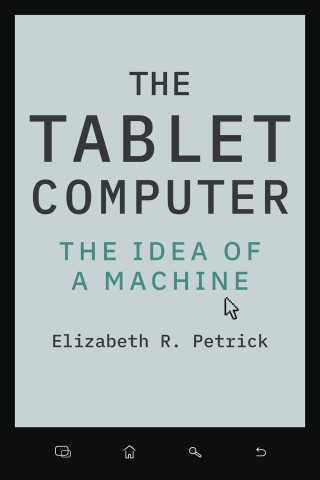
Cover of "The Tablet Computer: The Idea of a Machine" by Elizabeth R. Petrick, featuring the whole cover as a tablet-like gray screen with black and teal text and a small cursor icon.
Preorder
Cover of "The Tablet Computer: The Idea of a Machine" by Elizabeth R. Petrick, featuring the whole cover as a tablet-like gray screen with black and teal text and a small cursor icon.
Share this Title:

The Tablet Computer

The Idea of a Machine

Elizabeth R. Petrick

Publication Date
Binding Type

A history of the ideas behind a device we thought would change everything.

Tablet computers appear commonplace today, yet for decades they represented an ambitious—and often unrealized—vision of personal computing. The Tablet Computer traces the long history of this idea, from early conceptual designs in the 1970s to the consumer devices of the twenty-first century. Elizabeth R. Petrick examines the tablet as a shifting concept shaped by expectations about learning, productivity, accessibility, and human–computer interaction.

Across multiple generations of failed prototypes, partial successes...

A history of the ideas behind a device we thought would change everything.

Tablet computers appear commonplace today, yet for decades they represented an ambitious—and often unrealized—vision of personal computing. The Tablet Computer traces the long history of this idea, from early conceptual designs in the 1970s to the consumer devices of the twenty-first century. Elizabeth R. Petrick examines the tablet as a shifting concept shaped by expectations about learning, productivity, accessibility, and human–computer interaction.

Across multiple generations of failed prototypes, partial successes, and rebranded technologies, developers imagined tablets as book-sized, portable, networked computers operated through touch. These visions promised to transform education, support workers of various kinds, and redefine how humans interact with machines—promises that were repeatedly revised or deferred. Approaching the subject through intellectual history, Petrick follows how engineers, designers, corporations, and users debated what a tablet should be, who it was for, and what role it might play in everyday life. Projects such as the Dynabook, personal digital assistants, and early consumer tablets reveal how technological futures are shaped as much by aspiration and failure as by market success.

The Tablet Computer offers a fresh perspective on the history of computing by showing how devices are built from ideas that evolve over time. It will appeal to historians of technology, media scholars, and readers interested in how familiar machines carry the traces of unrealized futures.

Reviews

Reviews

Which came first, the tablet or the PC? As Petrick demonstrates here, the tablet is not merely a shrunk-down PC, but an idea that has, in its own right, inspired decades of computing research. Her detailed account reminds us to pay as much attention to technological failures as to successes in tracing the origins of our contemporary digital experience.

About

Book Details

Release Date
Publication Date
Status
Preorder
Trim Size
6
x
9
Pages
256
ISBN
9781421455303
Illustration Description
20 b&w illus.
Table of Contents

Table of Contents
Introduction: The Idea of a Tablet Computer
1. Pre-Tablet Influences
2. First Conceptual Tablet: The Dynabook
3. The Interim Dynabooks
4. Consumer Tablet Technologies
5. Personal Digital

Table of Contents
Introduction: The Idea of a Tablet Computer
1. Pre-Tablet Influences
2. First Conceptual Tablet: The Dynabook
3. The Interim Dynabooks
4. Consumer Tablet Technologies
5. Personal Digital Assistants
6. The Tablet Computer
Conclusion: What Is a Tablet Computer?

Author Bio
Featured Contributor

Elizabeth R. Petrick

Elizabeth R. Petrick is an associate professor of history at Rice University. She is the author of Making Computers Accessible: Disability Rights and Digital Technology.