
Johns Hopkins UniversityEst. 1876
America’s First Research University
Now Browsing:
Responding to Emotional Crisis: A Public Health Imperative
Many of us are taught how to respond to physical injury. Most homes and workplaces keep a first aid kit within reach. But when someone experiences acute emotional distress—panic on an airplane, overwhelming grief at a funeral, a teenager reeling from heartbreak, a colleague spiraling into anger—many of us are left unsure what to say or do. The Johns Hopkins Guide to Everyday Psychological First Aid by George S. Everly, Jr. and Jeffrey M. Lating addresses this gap directly. The book offers a practical, evidence-informed framework for responding to psychological “injuries” in everyday settings—at home, at work, at school, and in public spaces.
A Public Health Approach to Emotional Distress
Psychological first aid (PFA) has long been used in disaster response, emergency medicine, and military contexts. Everly and Lating were instrumental in developing the Johns Hopkins RAPID model of PFA, a structured intervention framework grounded in decades of research and field experience. In this new guide, they adapt that model for broader public use. The result is a structured approach designed to:
- Stabilize acute psychological distress
- Reduce its intensity
- Promote resilience
- Facilitate access to additional support when necessary
At its core, everyday psychological first aid (E-PFA) emphasizes skilled, compassionate communication as a primary mechanism of resilience.
Why This Book Matters Now
Rates of anxiety, loneliness, traumatic stress, and suicide remain pressing public health concerns. Research consistently demonstrates that interpersonal connection is one of the strongest predictors of psychological resilience. Yet most adults receive little guidance on how to offer effective support during moments of crisis. This guide responds to that need with clarity and restraint. The E-PFA model is organized into five sequential processes:
- Offer to help and set expectations
- Gather information
- Clarify the concerns
- Provide appropriate assistance
- Develop a short-term plan
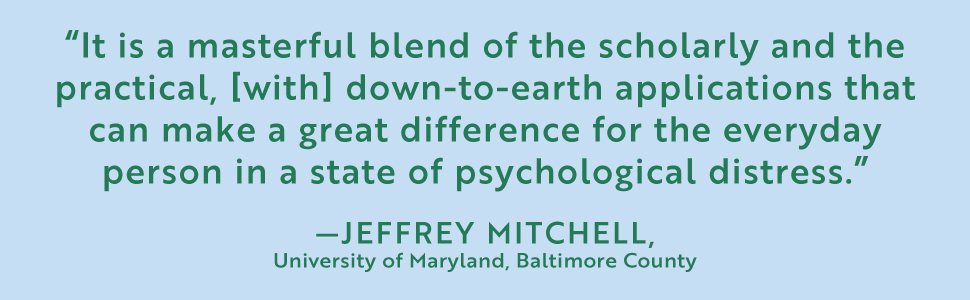
The book applies the model to common forms of distress—including depression, anxiety, panic, anger, traumatic stress, eating disorders, intoxication, grief, guilt and shame, suicidal thoughts, and psychotic episodes—using scenario-based illustrations and sample dialogues. The emphasis throughout is on practical judgment, appropriate boundaries, and recognizing when referral to professional care is essential.
One of the book’s distinctive contributions is its ability to translate a rigorously developed crisis intervention model into accessible, everyday practice. The work builds on the evidence base behind the Johns Hopkins RAPID model while presenting the material in a format suitable for general readers. For instructors and students in public health, psychology, social work, nursing, education, emergency management, and leadership studies, the book offers a structured introduction to crisis intervention principles. For libraries and community organizations, it fills an important space between clinical texts and popular self-help.
Preparing for the Moment That Matters
Emotional crises rarely announce themselves in advance. They arise in ordinary moments—during a conversation, in a classroom, at a workplace, or across a kitchen table. The Johns Hopkins Guide to Everyday Psychological First Aid argues that just as we learn physical first aid, we can learn to respond effectively to acute psychological distress. Not with improvised reassurance or misplaced certainty, but with a thoughtful, evidence-informed framework. In a time marked by rising psychological strain and social fragmentation, the capacity to offer steady, skillful support is a compassionate public good.

The Johns Hopkins Guide to Everyday Psychological First Aid
A Practical Approach to Helping Family, Friends, Coworkers, and Others Cope
Publication Date
Login to View & Leave Comments
Meet the Cats of Hopkins Press: The Purr-fect Companions to a New History of Cats
Cats through history—and around the Hopkins Press office.


Johns Hopkins University Press and BioOne Announce Landmark Nonprofit Integration
Baltimore, MD, and Washington, DC, USA, May 5, 2026—Johns Hopkins University Press (Hopkins Press) and BioOne today announced their merger, in a bold move designed to enhance community impact, expand future opportunities, and transform how they engage with...

Login to View & Leave Comments