
Johns Hopkins UniversityEst. 1876
America’s First Research University
Now Browsing:
In Defense of Truth

“Fake news.” “Alternative facts.” “Post-truth.” These phrases have become part of everyday life, shorthand for a broader unease about what is true, who can be trusted, and whether certainty is even possible anymore. In Truth: What It Is, How to Find It, Why It Matters, Michael Shermer argues that this unease is understandable but misplaced. Truth has not disappeared, and the tools for finding it remain firmly in our hands.
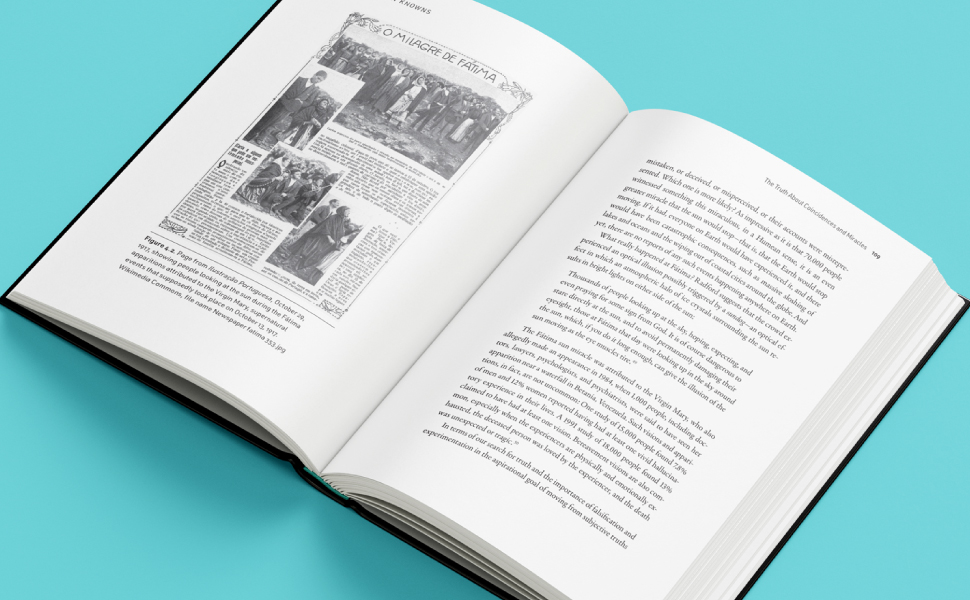
Shermer, the founding publisher of Skeptic magazine and the author of Conspiracy: Why the Rational Believe the Irrational, has spent decades studying belief, doubt, and the psychology of persuasion. In this new book, he turns his attention to a larger question: how we decide what to believe in an age of misinformation, polarization, and institutional distrust.

Rather than claiming that we live in a fact-free world, Shermer makes the case that truth is still discoverable when we are willing to think carefully about evidence and reasoning. He explains how scientists, historians, and everyday citizens evaluate claims, showing why the distinction between correlation and causation matters, how probability shapes what we should believe, and why extraordinary claims demand strong evidence.

The book moves easily between theory and real-world examples. Shermer examines conspiracy theories, political claims, religious miracles, reports of UFOs, and debates about consciousness, not to mock belief but to show how different kinds of claims require different kinds of evidence. His goal is not to tell readers what to think, but to give them reliable tools for thinking well.

Written for general readers, Truth avoids jargon and academic posturing. Its short, accessible chapters invite curiosity rather than defensiveness, making the book as much about rebuilding trust as about correcting falsehoods. At a time when skepticism is often confused with cynicism, Shermer offers a more hopeful alternative: careful reasoning, intellectual humility, and a renewed commitment to finding out what is actually true.


Also by Michael Shermer:

Login to View & Leave Comments
Callaloo presents: A bell hooks reading list
This spring, Vice President JD Vance announced the release of his new memoir, Communion, prompting a grassroots social media campaign that urged readers to—as The Word Is Change bookstore in Bed-Stuy, Brooklyn put it—“make sure if any book called Communion...


Login to View & Leave Comments