
Johns Hopkins UniversityEst. 1876
America’s First Research University
Now Browsing:
Back to Results
Progress in Community Health Partnerships: Research, Education, and Action
Progress in Community Health Partnerships (PCHP) is a national, peer-reviewed journal whose mission is to identify and publicize model programs that use community partnerships to improve public health, promote progress in the methods of research and education involving community health partnerships, and stimulate action that will improve the health of people and communities. The first scholarly journal dedicated to Community-Based Participatory Research (CBPR), PCHP is a must for public health professionals and the libraries that serve them.
About
Journal Details
Seeking EDITOR-IN-CHIEF & EDITORIAL TEAM
Progress in Community Health Partnerships (PCHP) is a national, peer-reviewed, quarterly journal, founded in 2006 with the support of the W.K. Kellogg Foundation and published by the Johns Hopkins University Press (JHUP). Our mission is to promote equity in public and community health by identifying and publicizing model programs and methods that use community partnerships to improve public health, promoting progress in the methods of research and education involving community health partnerships, and stimulating community-academic collaborations that improve the health of people and communities. The first scholarly journal dedicated to Community-Based Participatory Research (CBPR), PCHP has evolved as a leading forum as community engagement has become more widely appreciated for its importance in all forms of clinical and translational medical and public health research, action, education, and training. In recent years PCHP has sought to better amplify the community voice in all these endeavors and expand our long-standing commitment to diversity, inclusion, and anti-racism. PCHP has offered quarterly podcasts since its inception and more Face-to-Face Learning Community workshops and planning online webinars and “Office Hours” to promote community partners’ writing and authorship. We have sought to “practice what we preach” recruiting community partners as peer reviewers, Associate Editors, and Co-Editor-in-Chief.
The Editor-in-Chief (EIC) for our journal is typically a highly experienced professional who has a larger vision within the discipline of community engagement, partnerships, and CBPR to guide the journal. The EIC is expected to lead in defining and adjusting the journal’s evolving mission and to understand and adapt to the changing needs of our readership. The EIC recruits and maintains the editorial team, both Managing and Associate editors; provides broad oversight of the peer review and publication production processes; and strengthens its outreach and partnerships with community partners, such as Community-Campus Partnerships for Health. The new EIC and editorial team should be prepared to begin during the summer.
In order for the EIC to implement their editorial vision successfully, they must have an engaged and energetic editorial board. Our Community EIC, a long-serving Associated Editor now formally promoted, began January 1, 2024, and has led our Learning Community (referred to above). The Associate Editors currently serve unlimited terms, independent of the EIC’s term, so the EIC will not need to begin recruiting for open positions immediately. Sustaining an effective editorial board is critical in ensuring the journal’s health and success. An EIC leadership overlap is an option for the editorial transition.
The Managing Editors Team implement the production and publication process and are supported modestly by the annual income received from JHUP. The new EIC will be responsible for recruiting the Managing Editor (or team), again with a transition overlap possible. If you seek to advance equity in health through community-engagement and -partnership and have direct lived experience and a vision for the future direction of the science, practice, and authenticity of collaborations, please consider applying for our EIC position. Community-based leaders whose organizations can support Managing Editors are encouraged to apply. Experience in CBPR, an associate editor and with the Scholar One platform for manuscript review will be highly valued.
Please send your resume and/or Curriculum Vita and a cover letter to
[email protected]
By June 30th for consideration.
Applications will be reviewed as received. (The final selection will be contingent on the EIC candidate’s ability to recruit a Managing Editor or team.)
PCHP is pausing the acceptance of new submissions until 19 January 2026 in order to catch up on our backlog.
What this means for you:
- New Submissions: The online submission portal will be closed to new uploads during this period.
- Under Review Manuscripts: All manuscripts currently under review will continue their peer-review process without interruption.
- Resubmissions/Revisions: Authors with pending revisions or decisions will receive communications as usual.
We apologize for any inconvenience this temporary closure may cause and thank you for your understanding as we work to improve our journal's services.
Hopkins Press does not require potential contributors to pay an article submission fee in order to be considered for publication in any of the Journals that we publish. Any other website that purports to be affiliated with a Hopkins Press Journal and that requires you to pay an article submission fee is fraudulent. Do not provide payment information. Instead, we ask that you contact William Breichner, Hopkins Press Journals Publisher: [email protected].
Editorial Policies
Mission
The mission of the PCHP is to facilitate dissemination of effective programs that use community partnerships to improve public health, to promote progress in the methods of research and education involving community health partnerships, and to stimulate action that will improve the health of people in North America and throughout the world. Communities may be based on geography, shared interests, or social networks. PCHP is dedicated to supporting the broad range of work of community health partnerships that involve ongoing collaboration of community representatives, and academic, public, or private organizations. This includes but is not limited to the area of research referred to as community-based participatory research (CBPR) (Israel et al., 1998; Viswanathan et al., 2004). The W. K. Kellogg Foundation (2001) defines CBPR as “a collaborative approach to research that equitably involves all partners in the research process and recognizes the unique strengths that each brings. CBPR begins with a research topic of importance to the community and has the aim of combining knowledge with action and achieving social change to improve health outcomes and eliminate health disparities”. Although the majority of articles published by PCHP will feature work conducted by community health partnerships, PCHP will also consider publication of articles that discuss implications of community health partnership research.
PCHP Emphasis on Community Engaged Partnerships
PCHP aligns with the Continuum of Community Engagement in Research (CEnR) developed by Kent Key et al., which provides a comprehensive framework for understanding and assessing community engagement in research. The CEnR continuum offers a flexible model that acknowledges multiple points of engagement, ranging from minimal community involvement to fully community-driven research. By adopting this framework, PCHP emphasizes the importance of community leadership as a key component of meaningful engagement. The continuum underscores that equitable partnerships are not defined solely by participation in research activities but also by the distribution of power, resources, and decision-making authority. Central to this model is the recognition that community partners are essential contributors, guiding the research process to reflect their priorities, knowledge, and lived experiences. This approach aligns with PCHP’s commitment to fostering authentic partnerships that center community leadership throughout the research process.
Successful submissions should demonstrate how the project involved collaboration among academic, institutional, and community partners. Authors are encouraged to strategically outline this collaboration in multiple sections of the manuscript. While the partnership description does not need to be lengthy, it must provide sufficient detail for reviewers and the editorial team to verify the collaborative nature of the project.
When describing a partnership, it is recommended that the following areas are addressed:
- Formation (how, when, why) and history (how long in existence, has focus changed?) of the partnership
- Description of partners and who they represent.
- Roles and contributions of partners in the work described in the manuscript, including manuscript preparation.
At a minimum, community partners should have been involved in at least one key phase of the work—such as study design, implementation, or evaluation—along with participating in the manuscript preparation.
Additionally, authors should avoid referring to research participants as “subjects.” Instead, they should provide specific and appropriate descriptions of the study participants. Authors should also avoid referring to partners or the broader community as “stakeholders.” In Native American communities, the term "stakeholders" is often discouraged due to its colonial roots, which carry historical associations of land appropriation and exploitation. It can perpetuate harmful power dynamics and disregard the value of relational approaches centered on respect, collaboration, and community voice.
Authorship Criteria
Authorship is a way of assigning responsibility and giving credit for intellectual work. In keeping with the principles of best practices in community health partnership research, PCHP expects at least one author to be a community partner. PCHP defines a “community partner” as an individual who or community-based organization (CBO) that represents the interests, need, and lived experience of the community being engaged in the study or program. For example, with public programs a government agency may be conducting a program evaluation (e.g., research) where community partners individuals or CBOs represent the lived experience of the community served. Community partners may include staff members from community and faith-based organizations, healthcare providers, advocates, and community members with diverse lived experience (e.g. LGBTQ+, immigrants, older adults, youth and additional populations).
If a community partner is not listed as an author, authors need to provide a cogent rationale as part of their manuscript in their Acknowledgements section.
PCHP recognizes that “community” can reflect and be defined differently depending on various contexts; hence, manuscripts are reviewed given this nuance.
Contributions of intellectual work can be achieved in a non-traditional or innovative way. Authorship not only attributes credit but also holds authors accountable for the integrity and quality of their contributions. Authorship is a way of assigning responsibility and giving credit for intellectual work.
As a condition of authorship, each person must have:
- Made a substantial contribution to at least one part of the work. This includes conceptualization, planning, carrying out the work, analyzing the results, or interpreting any findings as a conclusion, reflection, or lessons learned. Substantial contribution could include engaging in creative, participatory processes to develop content for the manuscript, such as a storytelling session or arts-based activities.
- Reviewed and agreed on the version submitted to PCHP, during revision, the final version accepted for publication, and any significant changes introduced at the proofing stage.
- Agreed to take responsibility and be accountable for the contents of the article.
There may be instances when some members of the partnership do not meet the traditional requirements of authorship, despite having an integral role in the work described. For example, if a community organization or representative contributed to the study project but did not contribute to the preparation of the manuscript, per se. In this instance, the community organization or representative should be named in the Acknowledgement.
Collaborative Writing Processes:
PCHP strongly encourages writing processes that are inclusive and reflective of community input. Many community partners lead and contribute to writing published in PCHP. However, some community partners may feel less comfortable writing for an academic journal due to differing ideas about what such writing entails. Facilitating collaborative writing processes can be both fun and effective. The process benefits from incorporating diverse strategies and tools that accommodate the unique strengths and perspectives of all contributors. These methods can help demystify the writing process, enhance participation, and ensure that everyone's voice is heard. A list of strategies and tools designed to support and streamline collaborative writing efforts is below:
- Break Writing into Sections: Divide the manuscript into manageable sections, allowing each author or group to focus on specific parts that align with their expertise or interest.
- Participatory Methods: Facilitate interactive workshops, storytelling sessions, or arts-based activities to generate ideas and content collaboratively.
- Shared Online Tools: Utilize platforms like Google Docs or collaborative software to allow multiple authors to contribute and edit the document simultaneously.
- Automatic Transcription Tools: Record data interpretation sessions, reflections from partners, or discussions about different aspects of the project; then use the transcripts as a foundation for drafting the manuscript.
Institutional Review Board Approval
For all research projects involving research participants, the Methods section of the manuscript should describe approval or exemption by the appropriate institutional review board(s).
Duplicate/Prior/Overlapping Publication or Submission
Manuscripts will be considered if they have not been previously published and are not under review by another publication. If the submitted manuscript contains data that have been previously published, are in press, or are currently under review by another publication in any format, the authors are required to submit a copy of the published article at the time of submission with a clarification of the overlap and justification for consideration of the current submitted manuscript.
PCHP encourages authors to post their manuscripts on recognized preprint servers (such as arXiv, bioRxiv, SSRN, or other discipline-appropriate repositories) before, during, or after the peer review process. Posting on preprint servers does not constitute prior publication and will not preclude consideration for publication in PCHP. Authors should clearly indicate the preprint status and update version information as appropriate. Final citations should reference the published journal article once available.
Conflict of Interest/Disclosure Policy
The corresponding author must complete, sign, and upload a conflict of interest disclosure form at the time of manuscript submission: mc.manuscriptcentral.com/societyimages/pchp/PCHP_Conflict-of-Interest.pdf.
The Editorial Process
Peer Review and Decision
All manuscripts undergo peer review. In addition to external peer review, members of the PCHP editorial team discuss all submitted manuscripts. PCHP uses a single-blind review process, which means that the authors are not aware of the reviewers’ identities, but reviewers are provided with the names and affiliations of authors. Peer reviewers are asked to confirm they do not have a conflict of interest with conducting their review.
At the time of submission, authors are required to provide the names and contact information of at least three individuals who could serve as reviewers of their manuscript. These individuals should be able to provide an objective critique of the submitted manuscript. Suggested reviewers, therefore, should not be associated with the research partnership submitting the manuscript or have a conflict of interest with any submitting authors. Suggested reviewers should not be from the same academic institution or community organization as any of the authors. Do not recommend members of the PCHP Editorial Team.
Manuscripts will either be declined for publication based on reviewer and editorial team comments or returned back to the authors for revision and resubmission. Authors are asked to complete revisions within 30 days of receiving a decision letter. Extensions can be granted by contacting the editorial office ([email protected]).
Once the editorial office receives a revision it is returned to the assigned Associate Editor who will determine if the revised manuscript satisfactorily incorporated the external reviewer and editorial team recommendations. The Editor-in-Chief will also review the revised manuscript. Subsequent requests for revision may be given to authors.
Acceptance for Publication
In the acceptance letter, authors are asked to submit the names and contact information for 10-20 individuals who the authors would like to receive a copy of the manuscript. The PCHP editorial office will send these individuals a PDF of the manuscript at no cost to the authors.
Authors will receive typeset galley proofs via email from the PCHP Managing Editor. These proofs should be returned to the Managing Editor within 2-3 business days to facilitate adherence to the Journal’s production timeline.
PCHP publishes articles online ahead of print publication in the Articles Online section of the Journal website. Articles are published online approximately 1 to 2 weeks following the galley proofs.
All authors will be required to sign a Johns Hopkins University Press Publication Agreement at the time of manuscript acceptance: http://mc.manuscriptcentral.com/societyimages/pchp/CPR-PUBAGR2010.pdf. This Publication Agreement will be attached at the time a manuscript is accepted and should be returned to the Managing Editor via email at [email protected].
Information about Open Access and submission to PubMed Central (PMC) is available from press.jhu.edu/journals/author-resources/open-access.
"Beyond the Manuscript"
For each published issue, PCHP invites authors for one manuscript to take part in our "Beyond the Manuscript" podcast series. Beyond the Manuscript will feature a member of the editorial team interviewing at least one academic and one community partner. Each podcast lasts between 20-30 minutes and is intended to provide more detailed exploration of issues related to one or more aspects of the study described in the accepted manuscript (e.g., project initiation, implementation, or translation into practice) that may not ordinarily appear in print. A transcript of the podcast will be published alongside the accepted manuscript in the print version of PCHP. The podcast itself will be available via open access on the Journal’s website.
Manuscript Preparation
General Information
To submit a manuscript, authors should use the Journal’s web-based system at http://mc.manuscriptcentral.com/pchp. Authors will be guided through the creation and uploading of the various files necessary for submission. If an author has trouble accessing or using the site, or if electronic submission is not possible, please contact the editorial office ([email protected]).
The Journal welcomes submissions of manuscripts that deal with any health-related application of participatory research and evaluation, along the continuum of research from work-in-progress through translation into policy and practice. Health-related applications may include articles on health determinants, health outcomes, health services, health promotion, and diagnosis or treatment of disease. The Journal is particularly interested in studies that seek to improve health or healthcare delivery in underserved communities nationally and internationally. Manuscripts describing conceptual and theoretical issues related to participatory research are appropriate.
Manuscript documents must comply with layout and length requirements outlined below. The editorial office may decide that figures, tables, appendices, and other materials be published online only and referenced in the print edition of the Journal. All online only materials are publicly available.
Cover Letter
A Cover Letter must accompany all submissions. The Cover Letter should provide the following information:
- Full title of article
- A statement indicating that the content of the manuscript has not been published elsewhere nor is the work under consideration or will be submitted for consideration to any other journal while under consideration by PCHP.
- A statement of potential conflict of interest, real or perceived, for any of the study authors.
- A statement indicating that the study has received Institutional Review Board approvals, as appropriate.
Authors may also include a statement in the cover letter indicating why they chose to submit to a certain section of the Journal if they feel this explanation will help the external reviewers and editorial team.
Title Page
The title page should include: (a) title not exceeding 15 words; (b) all authors and their organizational affiliations; (c) word count for abstract; (d) word count for body of paper (excluding abstract, acknowledgements, references, tables and figures).
Abstract
Unless specified otherwise for a specific section of the Journal, all manuscripts should contain a structured abstract with headings for Background, Objectives, Methods, Results, and Conclusions. Please see the guidelines for each section below for the appropriate length of abstracts.
References
Authors should number references consecutively in the text and list them at the end of the article in the order in which they are cited. Identify all references in the text using superscript Arabic numerals. Authors are responsible for the completeness and accuracy of references.
All references (e.g., journal articles, books, electronic material) should be formatted using the International Committee of Medical Journal Editors (ICMJE) Uniform Requirements for Manuscripts Submitted to Biomedical Journals (http://www.nlm.nih.gov/bsd/uniform_requirements.html).
Abbreviations for journal titles should conform to those used in MEDLINE. Proper abbreviations for journal titles can be found using the following site (http://www.ncbi.nlm.nih.gov/nlmcatalog/journals)
Tables
Number tables consecutively in the text and print each table on a separate page. Include a brief but appropriately descriptive title for each table, and define all abbreviations and units of measure used in the table. Be sure to label all column and row headings clearly.
Figures
Number figures consecutively in the text, and print each figure on a separate page. Include a brief yet descriptive title for each figure. Illustrations and photographs should be professionally rendered, and all letters, numbers, and symbols must be clear and large enough to remain legible when reduced for publication. For photographs of people, provide written permission from the individuals. Print legends on a separate page at the end of the manuscript. Legends should enable readers to understand the figure without referring to the text. Include an appropriate credit line for all previously published figures and provide written permission.
Journal Style
Manuscripts should follow the guidelines in the Uniform Requirements for Manuscripts Submitted to Biomedical Journals (http://www.icmje.org). All manuscripts should be double-spaced and include at least .5-inch margins. For more information on proper style, please consult Citing Medicine the NLM Style Guide for Authors http://www.ncbi.nlm.nih.gov/books/NBK7256/.
Emphasis on Partnerships
All articles submitted to PCHP should clearly describe their partnership. Manuscripts that do not sufficiently describe their partnership run the risk of rejection. Successful manuscripts should clearly identify how the project involved collaboration among academic/institutional and community partners. The partnership description need not be lengthy, but must provide sufficient detail for reviewers and the editorial team that the project reflects collaboration among academic/institutional and community partners. In describing a partnership, it is recommended that the following areas be discussed:
- Formation (how, when, why) and history (how long in existence, has focus changed?) of the partnership
- Description of partners and who they represent
- Roles and contributions of partners in the work described in the manuscript, including manuscript preparation
The minimum expectation is that community stakeholders were involved in at least one important phase of the work, such as study design, implementation, or evaluation, in addition to participating in the preparation of the manuscript.
Authors should avoid describing research participants as “subjects.” Instead, authors should provide a specific and appropriate description of the study participants.
Positionality Statement
PCHP strongly encourages authors to include a positionality statement in their submissions. While not mandatory, these statements provide an opportunity for authors to reflect on their relationship to the population of focus, their personal ideologies, and the potential impact of their work on the field. PCHP invites authors to describe how their social identities, lived experiences, and professional roles have shaped their research process, including the development of research questions, data collection, and interpretation of findings. A Positionality Statement can be included in the narrative (which goes towards the word count) or in the Acknowledgement section. Note that you do not need to include anything that you do not feel comfortable publicly sharing about yourself.
Article Types
The Journal encourages submission of work that fits any of the types of articles described below. If authors feel that more than one area is appropriate for a particular article (e.g., a rigorous evaluation of an education or training initiative that could be appropriate for Original Research or Education & Training), they are encouraged to select the article type they feel will provide the most unique insights into the nature of their work. The editorial team reserves the right to suggest revision of a manuscript for a different section of the Journal.
- Original Research
- Work-in-Progress and Lessons Learned
- Community Perspective
- Policy and Practice
- Theory and Methods
- Education and Training
- Practical Tools
- Ethics and Community Collaborations
- Systematic Reviews
- Reflections From the field
- Invited Editorials
PCHP seeks to publish original research conducted using a participatory approach. The Journal is interested in a variety of research designs (experimental and observational) and methods (qualitative, quantitative, and mixed-method).
All manuscripts submitted as original research are limited to a maximum of 4000 words. Authors must submit a structured abstract of no more than 250 words, with the following headings: Background, Objectives, Methods, Results, and Conclusions.
The body of original research manuscripts should include four sections: Introduction, Methods, Results, and Discussion.
The Introduction should address the following types of questions:
- What is the problem being studied?
- Why are the methods of CBPR needed to address the problem?
The Methods section should address the following questions in addition to other aspects of the methods:
- How was the target community defined?
- How was the community partnership established?
- What role did the community members have in each stage of the project?
- How was Institutional Review Board approval obtained?
The Results section should consider the following questions:
- What were the results of addressing the stated objectives?
- Were there any other community-level effects (process or outcome)?
The Discussion section should consider whether any of the following questions apply:
- What are the new contributions of this research?
- What challenges were encountered when conducting the study and what lessons were learned?
- What were the limitations of the study?
- How were the results shared with the community?
- How do the results apply to other communities? (see Green & Glasgow (2006) for questions to consider when addressing applicability of the study)
- What are the implications for clinical practice, health education, public health policy, or future research?
Authors submitting reports of randomized control trials (RCT) must follow the CONSORT guidelines (http://www.consort-statement.org). Authors reporting results of a study using a non-randomized design should use the Transparent Reporting of Evaluations with Nonrandomized Designs (TREND) checklist (http://www.cdc.gov/trendstatement). For reports of studies of the accuracy and use of diagnostic tests, authors should follow the recommendations of the Standards for Reporting of Diagnostic Accuracy (STARD) statement (http://www.stard-statement.org)
All original research submissions must have an accompanying Community/Policy brief. The brief should be a summary of the manuscript written in non-technical language. The Community Policy Brief is intended to inform community-based organizations, public health policy makers, and other individuals whose primary interest is not research, but who would be interested in the application and translation of research findings for practical purposes. All Community/Policy Briefs are publicly available on the PCHP website.
Community Policy Briefs should include short bulleted text to answer the questions under each of the following required headings:
- What is the Purpose of this Study/Review?
- What is the Problem?
- What are the Findings?
- Who Should Care Most?
- Recommendations for Action
Sample policy briefs can be found in Community Policy Briefs.
2. Work-in-Progress and Lessons Learned
Work-in-Progress/Lessons Learned manuscripts may describe findings from early stages of a research project or preliminary/pilot work that may not be appropriate for an original research submission. Examples include quantitative and/or qualitative data collected to shape services or interventions or preliminary or pilot intervention data. The Journal also seeks manuscripts that describe lessons learned from a participatory research, education, or evaluation project. Lessons Learned manuscripts should describe “process” issues and challenges related to one or more aspects of a participatory research or evaluation project. For example, lessons learned may relate to power sharing, funding allocation, monetary control, community organizing, or collaboration between partners.
Manuscripts submitted to the Work-in-Progress/Lessons Learned section, despite its most limited word count, must provide sufficient detail on study design and methods to allow reviewers and readers to understand the preliminary results and/or lessons learned that are described. Manuscripts submitted to Work-in-Progress/Lessons Learned must also include sufficient description of the project’s partnership.
Manuscripts submitted to Work-in-Progress and Lessons Learned should be no more than 3000 words with a structured abstract of no more than 150 words. The abstract should have headings for Background, Objectives, Methods, Results (or Lessons Learned), and Conclusions.
back to list
PCHP seeks manuscripts that reflect the perspectives and insights of community partners involved in any aspect of partnership research, training, or evaluation. Most community perspective articles will be written by community partners. For example, community partners may write an article that provides their reflections on topics such as, but not limited to: power dynamics, communication methods, study development, ideas for education/training, or study impact/outcomes. The Journal will also review manuscripts written by academic partners, which clearly highlight the viewpoints or reflections of community partners. For example, manuscripts that summarize focus group data on community partners’ perceptions of partnership research or survey data collected solely from community partners about dimensions of equitable partnerships would be appropriate for the community perspective section.
Community partners are encouraged to be creative in their submissions to this section. Articles submitted to the community perspective section need not follow a traditional journal article format. Community Perspective articles should be no more than 2000 words, and should have an unstructured abstract of no more than 150 words. If describing a particular health partnership in the article, authors should provide sufficient detail on the partnership.
back to list
The Journal seeks manuscripts that cover a wide range of current or emerging issues in public health policy and practice that are relevant to community health partnerships. PCHP will consider a broad spectrum of topics including articles about: conducting health policy analysis and advocacy; informing public, institutional, or organizational policy on health, disease prevention and ethical issues; describing implementation of policies at local, state, and federal levels; addressing regulatory issues; developing new perspectives in policy formation, implementation, and modification; translation of research findings to clinical practice; and research findings that are ready to be used by healthcare decision makers.
Policy and Practice manuscripts must contain an introduction that identifies the problem and clearly explains the purpose of the paper. Authors should not merely review evidence but offer new policy and/or practice recommendations, and clearly identify them in the article. Authors must also clearly demonstrate how they came to those recommendations, and how a partnership approach contributed. Authors should consider including tables (e.g., to highlight key principles or recommendations) and figures (e.g., to show a conceptual model of the topic).
Policy and Practice manuscripts should be no longer than 3000 words, with a structured abstract of no more than 150 words. Policy and Practice abstracts should have the following headings: The Problem, Purpose of Article, Key Points, and Conclusion(s).
back to list
This section of the Journal seeks submissions describing theoretical, methodological, and/or analytic techniques and approaches useful in the conduct of research involving community health partnerships. For example, topics may include: studies on how to measure outcomes and processes of participatory research; development or analyses of current and emerging theoretical, behavioral, and conceptual models used in participatory research; testing the application of these models in the field; innovative methods or sampling strategies for collecting data; innovative models and approaches for data dissemination; and strategies for engaging community partners in the development and implementation of innovative theoretical or methodological approaches.
- Manuscripts submitted for this section should address the following questions:
- What is the theoretical, methodological, or analytic technique/approach?
- How is this technique/approach relevant to community health partnerships?
- How was the technique/approach used in an existing partnership (if applicable) and is there any data related to its use in the field?
- What are recommendations regarding use of the technique/approach?
Theory and Methods manuscripts must be no longer than 3000 words with a structured abstract of no more than 250 words. The abstract should include headings for Background, Objectives, Methods, and Conclusions.
back to list
PCHP seeks to publish articles that describe and evaluate training and education involving community health partnerships. Manuscripts submitted to this section should specify the audience for the education/training activities. Appropriate audiences include, but are not limited to, community partners working on a partnership project, community residents, students (undergraduate, graduate, postdoctoral), faculty and staff, community based organization staff, or health and human service professionals. Examples of submissions for this section are: assessing the quality and impact of training for researchers or community partners on CBPR; discussing strategies for training community members in research methods; examining research training and skill development among community partners on community-based clinical care, quality assessment and performance improvement; and developing innovative curricula for courses, conferences and seminars on CBPR for academicians or community agencies.
Manuscripts submitted for this section should address the following questions that are relevant to the design, implementation and evaluation of an educational program:
- What is the health problem and why is education needed to address the problem?
- Who are the targeted learners and what are their specific needs?
- What are the specific objectives of the education/training?
- How was the educational activity implemented?
- How was the educational activity evaluated, and what were the results of the evaluation?
- What are the recommendations for future use of the educational activity?
Evaluation of the educational activity, while not a requirement for Education and Training articles, is strongly encouraged. Evaluation activities could be quantitative and/or qualitative and should provide information on the feasibility, acceptability, and/or outcomes associated with the educational activity.
Education and Training manuscripts should be no longer than 3000 words with a structured abstract of no more than 250 words. The abstract should include headings for Background, Objectives, Methods, and Conclusions.
Liberal use of appendices that provide education/training materials (e.g., course outlines, curricula) is encouraged; appendices will not count toward the word limit for the manuscript. Longer appendices (e.g., entire curricula) will be published online only.
back to list
The Journal seeks manuscripts that describe practical tools and resources that facilitate the work of community health partnerships. Examples include: a resource manual on developing relationships between academic and community partners, such as use of a memorandum of understanding (MOU); instructions on the use of academic/community advisory boards; guides on how to collaboratively decide upon study methods and methodologies; books on research methods for conducting participatory research and evaluation; and websites and online resources.
Submitted manuscripts should consider the following questions:
- What is the tool and what is its purpose?
- Why was the tool needed?
- How was the tool developed?
- Who are the intended users of the tool?
- How should the tool be used?
- Has the tool been evaluated or tested in the field? If yes, what are findings or lessons learned?
Practical Tools manuscripts must be no longer than 2500 words with an unstructured abstract of no more than 150 words.
back to list
8. Ethics and Community Collaborations
Ethics and Community Collaborations manuscripts explore the ethical challenges that arise in the context of community-academic partnerships in research, service, and education. Manuscripts may be case studies that report the experiences of a particular partnership; normative articles that advocate for a change to existing policies, practices, or standards; or empirical articles that report original data relevant to an ethical issue commonly experienced in community collaborations. For more information, see Anderson, Emily E. "A Vision for “Ethics and Community Collaborations”." Progress in Community Health Partnerships: Research, Education, and Action 14, no. 3 (2020): 273-276. doi:10.1353/cpr.2020.0032.
Submissions written by community partners and those collaboratively written by community and academic partners are encouraged.
Manuscripts submitted to Ethics and Community Collaborations should be no more than 3000 words with an abstract of no more than 150 words. Empirical submissions abstract should have headings for Background, Objectives, Methods, Results (or Lessons Learned), and Conclusions. Other types of articles may submit unstructured abstracts.
back to list
PCHP will consider systematic reviews using evidence-based methods. Examples of manuscripts appropriate for this section include, but are not limited to: meta-analyses that examine effect sizes of health outcomes achieved by participatory research; reviews of the effectiveness of community health workers in participatory research and evaluation; and reviews of approaches for facilitating the translation of participatory research into practice.
Systematic reviews of observational studies should follow the recommendations of the Meta-analysis of Observational Studies in Epidemiology (MOOSE) group. See the article by Stroup et. al (2000) for the current MOOSE guidelines. Reviews of randomized controlled trials should follow the PRISMA Statement recommendations (http://www.plosmedicine.org/article/info%3Adoi/10.1371/journal.pmed.1000097). All systematic review submissions should include a flow diagram of study inclusion and exclusion.
Systematic Reviews manuscripts should be no more than 3000 words with a structured abstract of no more than 250 words. The abstract headings should include Objectives, Data Sources, Review Methods, Results, and Conclusions. Liberal use of appendices is encouraged; appendices will not count toward the word limit for the manuscript if they are to be published only in the electronic version of the Journal. Systematic Reviews should include a Community/Policy Brief (see previous instructions about the Community/Policy Brief).
back to list
10. Reflections from the Field
PCHP highly values the complex roles that community partners play and their lived experiences within community health partnerships that target community-identified problems, e.g., health disparities, structural inequities, and other social and health ills, or that mobilize community assets and efforts to address such problems. The journal seeks manuscripts that share the perspectives and insights of community and other project partners on how they creatively navigated community planning and problem-solving to stimulate action and policy, and thus to improve the health of individuals and communities. These manuscripts are most likely to be first-person, personal narratives about their lived experience. Authors will refer to themselves as “I” or “we” as they tell their story and that of their partnership.
Reflections will inform readers across multiple aspects and within broad social practices and institutions. A Reflections might:
- contextualize how a community-academic health partnership “translated” clinical health research to solve a major community-identified issue;
- offer personal reflections about commonalities, contrasts, and lessons learned by an author[s] who themselves were different types of partners at different times in their lives; for example, in one time as a so-called “disadvantaged”-community-based partner, in another time as an academia-based partner (or vice-versa); or
- present personal insights from their experiences of being first a community partner with little formal training and later an academically-trained partner with an advanced degree in community-based participatory research (CBPR).
The Reflections should include a description of its significance for community partnerships, their nature, future, or possible improvement.
The author[s] of Reflections may be community-, academia-, non-profit-, or government-based; community-based authors are especially encouraged. The topic and insights presented should be about and be discussed from the individual’s point of view.
You are encouraged to first discuss the topic of a Reflections with the Editor-in-Chief to determine PCHP’s interest in publishing it. Reflections from the Field manuscripts should be a maximum of 2,000 words and Abstracts a maximum of 150 words. No specific structure is required.
The PCHP Editorial Office will solicit editorials of no more than 1000 words for selected issues of the Journal. Editorials may also be suggested to the Editor-in-Chief via email.
Resources for Manuscript Preparation
For guidance on how to write about CBPR, please see the article by Bordeaux et al. (2007) entitled Guidelines for Writing Manuscripts About Community-Based Participatory Research for Peer-Reviewed Journals. This article is available at CPR-1.3bordeaux.pdf.
For guidance on reporting methods and results from qualitative research studies, please see Blignault & Ritchie (2009). Careful attention should be given to providing sufficient detail on qualitative methods, analytic techniques, and results (e.g., quotations, themes).
For general resources and guidance on writing for publication, please consult Practical Guides for Writing About Community-Based Participatory Research available at
CPR-1.3bordeaux.pdf.
back to list
Bibliography
Blignaut I, Ritchie J. Revealing the wood and the trees: Reporting qualitative research. Health Promot J Aust. 2009;20:140-145.
Bordeaux B, Wiley C, Tandon SD, Horowitz C, Brown P, Bass E. Guidelines for writing manuscripts about community-based participatory research for peer-reviewed journals. Prog Community Health Partnersh. 2007;1(3):281-288.
Green LW, Glasgow RE. Evaluating the relevance, generalization, and applicability of research: Issues in external validation and translation methodology. Eval Health Prof. 2006;29:126-153.
Israel, BA, Schulz, AJ, Becker AB. Review of community-based research: Assessing partnership approaches to improve public health. Annu Rev Public Health. 1998;19:173–202.
Stroup DF, Berlin JA, Morton, SC. Meta-analysis of observational studies in epidemiology: A proposal for reporting. JAMA. 2000;283:2008–2012.
Viswanathan M, Ammerman A, Eng E, Gartlehner G, Lorh KN, Griffith D, Rhodes S, Samuel-Hodge C, Maty S, Lux L, Webb L, Sutton SF, Swinson T, Jackman A, Whitener L. Community-Based Participatory Research: Assessing the Evidence. Evidence Report/Technology Assessment No. 99 (Prepared by RTI-University of North Carolina Evidence-Based Practice Center under Contract No. 290-020016. AHRQ Publication 04-E022-2. Rockville, MC. Agency for Healthcare Research and Quality. July 2004.
W.K.Kellogg Health Scholars. Community track: goals and competencies. Ann Arbor (MI): University of Michigan. Available from: https://www.cdc.gov/pcd/issues/2007/jul/06_0182.htm.
The Hopkins Press Journals Ethics and Malpractice Statement can be found at the ethics-and-malpractice page.
Peer Review Policy
Progress in Community Health Partnerships(PCHP) is an international, single-blinded, peer-reviewed quarterly journal, focusing on the role of collaboration between communities, community-based organization, universities, academic medical centers, health departments, and other organizations in promoting individual, community, and public health and examining community-based participatory research..Our mission is to facilitate dissemination of effective programs that use community partnerships to improve public health, to promote progress in the methods of research and education involving community health partnerships, and to stimulate action that will improve the health of people in North America and throughout the world.
Submissions are English-only and are submitted through the ScholarOne online manuscript management platform and are typically reviewed within 6-8 weeks of submission. The Managing Editor and an Associate Editor screen all submissions for goodness of fit with PCHP’s focus and advise authors if their manuscript’s subject matter is inappropriate or if noncompliant with the journal’s manuscript style and formatting.At the time of submission, authors are required to provide the names and contact information of at least three individuals who could serve as reviewers of their manuscript. These individuals should be able to provide an objective critique of the submitted manuscript. Suggested reviewers, therefore, should not be associated with the research partnership submitting the manuscript or have a conflict of interest with any submitting authors. Suggested reviewers should not be from the same academic institution or community organization as any of the authors. Associate Editors then invite as many potential reviewers as necessary to assure 2-4 peer reviewers for each manuscript. After peer reviews are completed, all manuscripts are presented by the manuscript’s Associate Editor and discussed with the other Associate Editors and Co-Editors-in-Chief. Submissions are evaluated using four broad criteria: relevance to the journal’s focus, scholarly rigor, clarity of writing and logic of organization, and the work’s originality so that each publication will be a contribution to the field’s existing literature. In addition manuscripts are assessed on the Guiding Principles of Partnership developed and maintained by Community Campus Partnerships for Health (https://ccphealth.org/partnering/principles-of-partnering/). Co-authorship with community partners is strongly encouraged.
PCHP does not publish material published elsewhere or accept simultaneous submissions to other journals. PCHP publishes manuscripts in the following categories: (1) Original Research; (2) Works-in-Progress/Lessons Learned; (3) Community Perspectives; (4) Perspectives on Partnerships, Policy & Practice; (5) Theory & Methods; (6) Education & Training; (7) Practical Tools; (8) Systematic Reviews; (9) Ethics in Community Collaborations; (10) Letters to the Editor; and (11) Book Reviews. The journal also publishes invited editorials and commentaries which are reviewed and discussed by our Associate Editors. The categories of editorial decisions include Acceptance, Minor Revision, Major Revision, Reject & Resubmit, and Rejection. Articles which are recommended for revision and resubmission should be accompanied by a cover letter summarizing the changes, and resubmissions may be reviewed at the Associate Editor’s level or rarely sent out for an additional round of peer-review when indicated. PCHP has an Associate Editor who consults on manuscripts regarding biostatistics and methodology and another who consults on bioethics.
Co-Editors-in-Chief
 A. Hal Strelnick, MD
Associate Dean for Community Engagement, Emeritus
Albert Einstein College of Medicine
Email: [email protected]
Phone: 718-920-4678
ORCID: 0000-0001-6985-7350
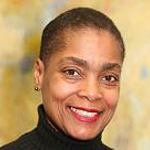 Karen Calhoun, MA
Community Engaged Research Program Officer, Retired
Institute for Clinical & Health Research
University of Michigan
Email: [email protected]
ORCID: 0000-0002-5011-9718
Editors Emeritus
S. Darius Tandon, PhD (2012-2018)
Associate Professor
Northwestern University Feinberg School of Medicine
Email: [email protected]
ORCID: 0000-0002-3243-903X
Eric B. Bass, MD, MPH (2007-2012)
Johns Hopkins University School of Medicine
Email: [email protected]
ORCID: 0000-0001-9106-527X
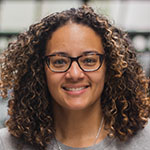 Ann-Gel Palermo, DrPH, MPH (2019-2023)
Senior Associate Dean for Diversity, Equity, and Inclusion;
Chief Diversity, Equity, and Inclusion Officer for Education and Research
Department of Medical Education Icahn School of Medicine at Mount Sinai;
Office for Diversity & Inclusion, Mount Sinai Health System
Email: [email protected]
ORCID: 0000-0002-1644-4138
Managing Editors
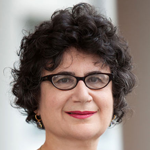 Racheline G. Habousha, MSLS
Director, D. Samuel Gottesman Library
Albert Einstein College of Medicine
Email: [email protected]
Phone: 718-430-3108
ORCID: 0000-0002-4514-8346
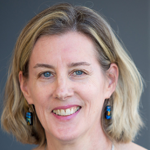 Nancy R. Glassman, MLS, MPH
Assistant Director, D. Samuel Gottesman Library
Albert Einstein College of Medicine
Email: [email protected]
Phone: 718-430-3108
ORCID: 0000-0001-9175-071X
 Claudia Lechuga, MS
ICTR Director of Evaluation and Tracking
Albert Einstein College of Medicine
Email: [email protected]
ORCID: 0000-0003-3268-9351
Associate Editors
 Michelle Abraczinskas, Ph.D.
Assistant Professor of Youth Development/Prevention Science
Department of Family, Youth, and Community Sciences
University of Florida
Email: [email protected]
ORCID: 0000-0003-1069-9575
 Martha I. Arrieta, MD, MPH, PhD
Community Engagement Advocate
Director of Research, Retired
Center for Healthy Communities
University of South Alabama
Email: [email protected]
ORCID: 0000-0003-2514-5743
 Patricia M. Bamwine, MA, MSW, PhD
Assistant Professor of Social Work
University of Tennessee-Knoxville
Email: [email protected]
ORCID: 0000-0002-3727-8191
 Mallory Bejster, DNP, RN, CNL
Associate Professor
Department of Community, Systems and Mental Health Nursing
Rush University College of Nursing, Chicago, IL
Email: [email protected]
ORCID: 0000-0002-6313-495X
 Perla Chebli, PhD, MPH
Assistant Professor, Department of Population Health
NYU Grossman School of Medicine
Email: [email protected]
ORCID: 0000-0002-0344-442X
 Karen D'Alonzo, PhD, RN
Associate Professor
Rutgers University School of Nursing
Email: [email protected]
ORCID: 0000-0002-3912-7442
 Vanessa Vielka de Danzine, PhD, MPH, MPA
Community Based Organization Partners (CBOP-BK), Brooklyn Chapter
Email: [email protected]
ORCID: 0000-0002-3817-1636
 Christina Doll, PhD, MA
Associate Professor of Health Education and Promotion
Department of Nutrition and Health Science, College of Health, Ball State University
Email: [email protected]
ORCID: 0000-0002-8530-7807
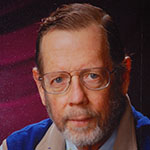 William L. Freeman, MD, MPH, MJIL, CIP
Program Director, Center for Health & Human Protections Administrator, Northwest Indian College Institutional Review Board (NWIC IRB)
Northwest Indian College
Email: [email protected]
ORCID: 0000-0002-1552-8006
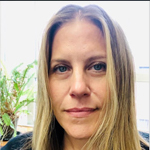 Suzanne M. Dolwick Grieb, PhD, MSPH
Assistant Professor
Center for Child and Community Health Research
Department of Pediatrics, Johns Hopkins School of Medicine
Email: [email protected]
ORCID: 0000-0001-9971-4115
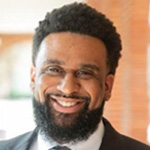 LaShawn M. Hoffman
Civic Leader, Public Health Advocate, Community Development Strategist
Hoffman & Associates
Email: [email protected]
ORCiD: 0009-0000-7073-3451
 Valarie Blue Bird Jernigan, DrPH, MPH
Professor of Medicine, Director, Center for Indigenous Health Research and Policy
Oklahoma State University Center for Health Sciences
Email: [email protected]
ORCID: 0000-0002-3965-8518
 Kent Key, PhD, MPH, BBA
Associate Chair for Community Partnered Institutional Administration, Charles Stewart Mott Department of Public Health.
Michigan State University, College of Human Medicine
Email: [email protected]
ORCID: 0000-0002-1625-7463
 Roula Kteily-Hawa, BEd, MPH, MSc, PhD
Associate Professor
Western University, London, Ontario, Canada
Email: [email protected]
ORCID: 0000-0001-5581-0017
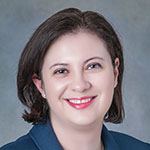 Karen Mancera-Cuevas DrPH, MS, MPH, CHES
Senior Director of Health Equity
National Health Council
Email: [email protected]
ORCID: 0000-0002-6119-1731
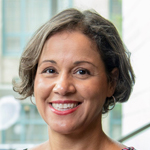 Linda Sprague Martinez, PhD
Professor of Medicine
Director, Health Disparities Institute (HDI)
UConn Health
Email:[email protected]
ORCID: 0000-0002-5070-7640
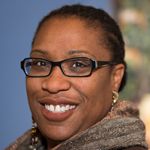 Chioma Nnaji, MPH, MEd
Organizer | Public Health + Equity Consultant | Facilitator | Community Action Researcher Program Director, Multicultural AIDS Coalition PhD Candidate, University of Massachusetts Boston, School of Global Inclusion and School Development Culture of Health Leader, Cohort 4, Robert Wood Johnson Foundation
Email: [email protected]
ORCID: 0000-0001-8512-7913
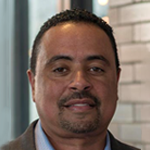 Charles Senteio, PhD, MBA, LCSW
Associate Professor
Department of Library and Information Science
Rutgers University School of Communication and Information
ORCID: 0000-0002-0254-3127
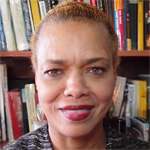 Paulette Spencer, MPH, MA
Community Engagement Specialist and Health Policy Analyst, Bronx Community Health Network
Chair, Board of Directors, Bronx Community Research Review Board
Email: [email protected]
 Guillermo Wippold, PhD
Assistant Professor, Department of Psychology
College of Arts and Sciences
University of South Carolina
Email: [email protected]
ORCID: 0000-0002-0095-298X
Associate Editor for Methodology and Statistics
 Melody Goodman, PhD
Associate Dean for Research/ Associate Professor of Biostatistics
New York University School of Global Public Health
Email: [email protected]
ORCID: 0000-0001-8932-624X
External Editorial Board
To view the most recent Progress in Community Health Partnerships: Research, Education, and Action External Editorial Board, please visit: CPR-external-editorial-board.pdf.
National Call for Community-Based Volunteers: Peer Reviewers & Associate Editors
Progress in Community Health Partnerships (PCHP)
On April 1, 2018, the Albert Einstein College of Medicine welcomed the re-location of the Editorial Offices of the Johns Hopkins University Press journal, Progress in Community Health Partnerships (PCHP), to the Bronx. Nancy Glassman and Racheline Habousha have succeeded Adela Mizrachi as Managing Editors and Hal Strelnick has succeeded Darius Tandon as Editor-in-Chief. As is common in such transitions, a number of Associate Editors have also decided to move on now, leaving vacancies on the journal’s editorial board.
Peer Reviewers: The journal is interested in achieving a better balance between community-based editors and reviewers and those based in academic institutions. Peer reviewers receive an invitation to read and give us feedback on a manuscript submitted to the journal for publication and rarely are asked to review more than twice per year. Ideally, these reviews are completed in 3-4 weeks. We use a secure website, ScholarOne, for communicating confidentially about the manuscripts. We welcome anyone interested in volunteering to help us!
Associate Editors: As noted above, we have about a half-dozen vacancies for Associate Editors on our editorial team. Each newly submitted manuscript is assigned to an Associate Editor, who assigns Peer Reviewers from the journal’s database or individuals who the authors recommend. Since many reviewers are busy, we regularly have to invite more than three to reach our goal. The journal seeks to have three peer reviewers for every manuscript. When PCHPhas received the three confidential reviews in the ScholarOne system, the Associate Editors prepare a summary based on their own reading of the manuscript and the feedback received from the peer reviewers. The Associate Editors then share their assessments during a 90-minute videoconference discussion held every other week with all the available Associate Editors, led by the Editor-in-Chief. The group then makes a decision on whether accept the manuscript as is, ask the authors to make major or minor revisions, reject the manuscript but invite the authors to re-submit a much revised manuscript, or reject the manuscript outright. The Associate Editors work with the authors throughout the revision process. Associate Editors receive about one manuscript per month.
If you are interested in volunteering as either a Peer Reviewer, Associate Editor, or both, please send us your resume, areas of interest and expertise, and your contact information to,
Editorial Office
Progress in Community Health Partnerships
c/o Albert Einstein College of Medicine
[email protected] & [email protected]
Abstracting & Indexing Databases
- CABI
- Abstracts on Hygiene and Communicable Diseases (Online)
- AgBiotechNet
- Agricultural Economics Database
- Animal Science Database
- CAB Abstracts (Commonwealth Agricultural Bureaux)
- Dairy Science Abstracts (Online)
- Environmental Impact
- Forest Science Database
- Global Health
- Horticultural Science
- Leisure Tourism
- Nutrition Abstracts and Reviews. Series A: Human and Experimental (Online)
- Nutrition and Food Sciences Database
- Rural Development Abstracts (Online)
- Soil Science Database
- Soils and Fertilizers (Online)
- TropAg & Rural
- Tropical Diseases Bulletin (Online)
- World Agricultural Economics and Rural Sociology Abstracts (Online)
- Clarivate Analytics
- Current Contents
- Web of Science
- Elsevier BV
- EMBASE
- Scopus, 2007-
- National Library of Medicine
- PubMed
- OCLC
- ArticleFirst, vol.1, no.1, 2007-vol.4, no.4, 2010
- Electronic Collections Online, vol.1, no.1, 2007-vol.4, no.4, 2010
- ProQuest
- Health & Medical Collection, 4/1/2010-
- Health Research Premium Collection, 4/1/2010-
- Hospital Premium Collection, 4/1/2010-
- Medical Database, 4/1/2010-
- Professional ProQuest Central, 04/01/2010-
- ProQuest 5000, 04/01/2010-
- ProQuest 5000 International, 04/01/2010-
- ProQuest Central, 04/01/2010-
- Public Health Database, 04/01/2010-
- Research Library, 04/01/2010-
- Social Science Database, 4/1/2010-
- Social Science Premium Collection, 04/01/2010-
- U.S. National Library of Medicine
- MEDLINE
Source: Ulrichsweb Global Serials Directory
0.6 (2024)
1.3 (Five-Year Impact Factor)
0.00096 (Eigenfactor™ Score)
Rank in Category (by Journal Impact Factor):
388 of 419 journals, in “Public, Environmental & Occupational Health”
© Clarivate Analytics 2025
In each volume of Progress in Community Health Partnerships: Research, Education, and Action, PCHP editors select one article for our Beyond the Manuscript podcast interview with the authors. Beyond the Manuscript provides the authors with the opportunity to tell listeners what they would want to know about the project beyond what went into the final manuscript. The associate editors who handled the articles conduct our Beyond the Manuscript interviews. Listen to each podcast episode by clicking on the play button in the player beneath each description.
Beyond the Manuscript 18.4 515-522
Beyond the Manuscript: COVID-19’s Impact on Community Resilience Practice: Lessons Learned from an Academic-Community-Government Partnership to Reduce HBV
Beyond the Manuscript 18.3 421-425
Beyond the Manuscript: Lessons Learned from Community Partnership During theCOVID-19 Pandemic
Beyond the Manuscript: 18.2 203-212
Beyond the Manuscript: Criminal Justice System Panel Discussion Karen Calhoun, Will Boles, Thad Tatum, Katie Schwartz, Beatric Beverly, Ingie Osman, and Antonio Williams
Beyond the Manuscript: 18.1 37-46
Challenges and Lessons Learned from a Community-Engaged Evaluation of a Community Advisory Board. Emma Tumilty interviews Stephanie Cargill and Bryan Spencer.
Beyond the Manuscript: 17.4 e1-e2
Critical Reflections on This Historical Moment for Community-Engaged and Participatory Research, Ysabel Duron, Milton "Mickey" Eder, Leo S. Morales, Keith Norris, Linda Sprague Martinez
Beyond the Manuscript: 17.4 e5-e6
Mi Gente, Nuestra Salud: Protocol for a People's Movement for Health Ownership, Marilyn Tseng, Mario Espinoza-Kulick, Irebid Gilbert, Karen D’Alonzo
Beyond the Manuscript 17.3
A Minimum Age for California's Juvenile Legal System: Lessons on Collaborative Research to Drive Legislative Change and Leveraging Collaborative Partnerships to Protect the Human Rights of Children Involved in the United States' Juvenile Justice System, with Elizabeth S. Barnert, Melissa Coretz Goemann, Dafna Gozani, Hal Strelnick
Beyond the Manuscript 17.2
In this episode of Beyond the Manuscript, Associate Editor, Emma Tumilty, interviews Jennifer Tjia and Leopoldo Negrón-Cruz, authors of “Perspectives of Community Partners Involved in an Academic Training to Address Clinicians’ Implicit Bias.”
Beyond the Manuscript 17.1
In this episode of Beyond the Manuscript, Associate Editor, Emma Tumilty, interviews Joanne Glenn, Henrietta Barcelo, and Janine Ntihirageza, authors of “Community Driven Conversations: Partnership Building through CHEC-Ins.”
Beyond the Manuscript 16.4
In this episode of Beyond the Manuscript, Co-Editor-in-Chief, Hal Strelnick interviews Julie Beans and Erica Woodahl, authors of “Values and Practices to Strengthen Genetic Research Partnerships with Indigenous Communities.”
Beyond the Manuscript 16.3
In this episode of Beyond the Manuscript, Associate Editor Kimberly Stone interviews Jessica Black, Orly Stampfer, and Omar Torres, authors of “Partnership to Develop and Deliver Curriculum Supporting Student-Led Air Quality Research in Rural Washington State” and Sarah Cooper and Sandrine Zuyderhoff, authors of “ Methodological reflections of a student and community-based partnership on operationalizing CBPR model: Recommendations for building, securing, and sustaining partnerships.”
Beyond the Manuscript 16.2
In this episode of Beyond the Manuscript, Associate Editor, Karen D’Alonzo interviews Tatiana Bustos and Sana Simkani, authors of “Integrating Mixed Methods Social Network Analysis to Assess Community Academic Partnerships.”
Beyond the Manuscript 16.1
In this episode of Beyond the Manuscript, Editor-in-Chief, Hal Strelnick interviews Elizur Bello Jiménez, author of Latinx Community Health Workers: Meeting their Community’s Emotional Needs in Intuitively Culturally Appropriate Ways and Abby Lohr and Cynthia Espinoza, authors of Community Health Worker-Led Community Clinical Linkages on the U.S. / Mexico Border: Lessons Learned
Beyond the Manuscript Volume 15.4
This episode of Beyond the Manuscriptis a conversation between Editor-in-Chief, Hal Strelnick and Associate Editors Suzanne M. Dolwick Grieb, Darcy Jones McMaughan, Kent D. Key, Roula Kteily-Hawa, authors of "Promoting and Advocating for Ethical Community Engagement: Transparency in the Community-engaged Research Spectrum."
Beyond the Manuscript Volume 15.3
In this episode of Beyond the Manuscript, associate editor Vanessa De Danzine interviews Catalina Tang Yan and Necole Muhammad, authors of "'Don’t Shoot, I Want to Grow Up': Findings of a Multi-city Youth-led Health Assessment ."
Beyond the Manuscript Volume 14.4
In this episode of Beyond the Manuscript, Associate Editor Vanessa de Danzine interviews Mindy Fullilove, one of the authors of the recently published book, From Enforcers to Guardians: A Public Health Primer on Ending Police Violence.
Beyond the Manuscript Volume 14.3
In this episode of Beyond the Manuscript, co-editors-in-chief Ann-Gel Palermo and Hal Strelnick interview Emily Anderson, the journal’s new associate editor for ethics and author of “A Vision for Ethics and Community Collaborations.”
Beyond the Manuscript Volume 14.1
In this episode of Beyond the Manuscript, Editor-in-Chief, Hal Strelnick, interviews Ann-Gel Palermo, Progress in Community Health Partnership's new Co-Editor-in-Chief.
Beyond the Manuscript Volume 13 Special Issue
In this episode of Beyond the Manuscript, Editor-In-Chief Hal Strelnick interviews Melissa Simon and Joanne Glenn, authors of "Building Cross-Institutional Collaborative Infrastructure and Processes: Early Lessons From the Chicago Cancer Health Equity Collaborative."
Beyond the Manuscript 13.4
In this episode of Beyond the Manuscript, Editor-in-Chief Hal Strelnick interviews Bonnie Duran, one of the authors of “Toward Health Equity: A National Study of Promising Practices in Community-Based Participatory Research.”
Beyond the Manuscript 13.3
In this episode of Beyond the Manuscript, Associate Editor Jessica Holzer interviews Carrie Fry, Caroline Young, and Molly Sudderth, three of the authors of "Development of a Tobacco Control 'Prescription' in a Southern US City."
Beyond the Manuscript 13.2
In this episode of Beyond the Manuscript, Associate Editor Suzanne Dolwick-Grieb interviews Erin Haynes and Rusty Roberts, two of the authors of "Public Participation in Air Sampling and Water Quality Test Kit Development to Enable Citizen Science."
Beyond the Manuscript 13.1
In this episode of Beyond the Manuscript, Associate Editor, Suzanne Dolwick-Grieb, interviews Elizabeth Lynch and Alan Ragland, two of the authors of “Results of ALIVE: A Faith-Based Pilot Intervention to Improve Diet Among African American Church Members.”
Beyond the Manuscript 12.4
In this episode of Beyond the Manuscript, Associate Editor, Hae-Ra Han, interviews Ron Wincek and Madeleine E. Hackney, two of the authors of “Research Advocacy Training Program Benefits Diverse Older Adults in Participation, Self-Efficacy and Attitudes toward Research.”
Beyond the Manuscript 12.3
In this episode of Beyond the Manuscript, Associate Editor, Michael Yonas, interviews Consuelo Wilkins and Al Richmond, authors of "Community Experiences and Perceptions of Clinical and Translational Research and Researchers."
Beyond the Manuscript 12.2
In this episode of Beyond the Manuscript, Associate Editor, Jessica Holzer, interviews Karen Calhoun and Mickey Eder, authors of “Defining and Measuring Community Engagement and Community-Engaged Research: CTSA Institutional Practices.” The transcript has been edited for clarity and accuracy.
Beyond the Manuscript Volume 12 Special Issue
In this episode of Beyond the Manuscript, Guest Associate Editor, Emily Blejwas interviews Shearie Archer and Jennifer Langhinrichsen-Rohling, authors of "Developing a Productive Workgroup Within a Community Coalition: Transtheoretical Model Processes, Stages of Change, and Lessons Learned."
Beyond the Manuscript 12.1
In this episode of Beyond the Manuscript, Associate Editor Karen Yeary interviews Rucha Kavathe and Mary Northridge, authors of “Building Capacity in the Sikh Asian Indian Community to Lead Participatory Oral Health Projects.”View the transcript
Beyond the Manuscript 11.4
In this episode of Beyond the Manuscript, Associate Editor Simona Kwon interviews Shannah Tharp-Gilliam and Michael Yonas, authors of "Using Concept Mapping to Explore and Engage Parent and Youth Residents of an Economically Underserved Minority Community around Children's Asthma."
Beyond the Manuscript 11.3
In this episode of Beyond the Manuscript, Associate Editor Larkin Strong interviews Madelyn Labella and Janelle Leppa, authors of “Promoting Resilience by Improving Children’s Sleep: Feasibility among Families Living in Supportive Housing.”
Beyond the Manuscript 11.2
In this episode of Beyond the Manuscript, Editor-in-Chief Darius Tandon interviews Deborah John, author, and Liana Harden, Extension community health partner in "Community-Engaged Attribute Mapping: Exploring Resources and Readiness to Change the Rural Context for Obesity Prevention."
Beyond the Manuscript 11.1
In this episode of Beyond the Manuscript, Associate Editor Karen Yeary interviews Sarah Miner and Sadiya Omar, authors of "Using a Clinical Outreach Project to Foster a Community-Engaged Research Partnership With Somali Families."
Beyond the Manuscript 10.4
In this episode of Beyond the Manuscript, Associate Editor Suzanne Dolwick Grieb interviews Becky Delafield, Adrienne Dillard, and Puni Kekauoha, authors of "A Community-Based Participatory Research Guided Model for Dissemination of Evidence-Based Interventions."
Beyond the Manuscript 10.3
In this episode of Beyond the Manuscript, Associate Editor Erin Kobetz interviews Maghboeba Mosavel and Dwala Ferrell, authors of "House Chats as a Grassroots Engagement Methodology in Community-Based Participatory Research: The WE Project, Petersburg."
Beyond the Manuscript 10.2
In this episode of Beyond the Manuscript, Associate Editor Erin Kobetz interviews Bruce Armstrong and Pamela Valera, authors of "Academic Health Center"Community Justice Program Partnerships: Linking Men in the Justice System to Health Care."
Beyond the Manuscript 10.1
In this episode of Beyond the Manuscript, Associate Editor Larkin Strong interviews Zeno Franco and Mark Flower, authors of "Community Veterans' Decision to Use VA Services: A Multimethod Veteran Health Partnership Study."
Beyond the Manuscript 9.4
In this episode of Beyond the Manuscript, Associate Editor Jess Holzer interviews Thoai Nguyen, Giang Nguyen, Rorng Sorn, and Taehoon Kim, authors of "Differential Role of Social Connectedness in Geriatric Depression among Southeast Asian Ethnic Groups."
Beyond the Manuscript 9.3
In this episode of Beyond the Manuscript, Associate Editor Michael Yonas interviews Brett Ives and Jessica Hughson-Andrade, authors of "Vision Voice: A Multimedia Exploration of Diabetes and Vision Loss in East Harlem."
Beyond the Manuscript 9.2
In this edition of Beyond the Manuscript, Associate Editor Haera Han interviews Christina Nicolaidis and Dora Raymaker, authors of "Community based participatory research to adapt health and violence measures for use by people with developmental disabilities."
Beyond the Manuscript 9.1
In this edition of Beyond the Manuscript, Associate Editor Hae-Ra Han interviews Amal Killawi and Aasim Padela, authors of "Using CBPR for Health Research in American Muslim Mosque Communities: Lessons Learned."
Beyond the Manuscript 8.2
This edition of Beyond the Manuscript features Scotney Evans, Daniella Levine, Catherine Raymond, authors of Miami"s Third Sector Alliance for Community Well-being, and PCHP Associate Editor Katherine Smith.
Beyond the Manuscript 8.1
This edition of Beyond the Manuscript features Mary Oneha and Joan Dodgson, authors of Lessons Learned: Refining the Research Infrastructure at Community Health Centers, and PCHP Associate Editor Haera Han.
Beyond the Manuscript 7.4
This edition of Beyond the Manuscript features Nancy Winterbauer and Kathy Garrett, authors of A Communications Tool to Recruit Policymakers to a CBPR Partnership for Childhood Obesity Prevention, and PCHP Editor-in-Chief Darius Tandon.
Beyond the Manuscript 7.3
This edition of Beyond the Manuscript features Maryann Mason, Darby Morhardt, Ben Rucker, Monique Reed, Gina Curry, Jen Brown and Bill Haley, authors of I Know What CBPR Is, Now What Do I do? . . . Community Perspectives on CBPR Capacity Building, and special issue Guest Editor Elmer Freeman.
Beyond the Manuscript 7.2
This edition of Beyond the Manuscript features Vida Henderson, Claudia Guajardo, and Gloria Palmisano, authors and community partners of Community-Based Participatory Research and User-Centered Design in a Diabetes Medication Information and Decision Tool, and Associate Editor Shonali Saha.
Beyond the Manuscript 7.1
This edition of Beyond the Manuscript features Becky Dennison, author of Organizing for Health Communities: A Report from Public Housing in Los Angeles, and Special Issue guest editor Nicole Vaughn.
Beyond the Manuscript 6.4
This edition of Beyond the Manuscript features Alexandra Lightfoot and Melvin Jackson, authors of 'In My House': Laying the Foundation for Youth HIV Prevention in the Black Church and PCHP Associate Editor Jess Holzer.
Beyond the Manuscript 6.3
This edition of Beyond the Manuscript features Sarah Kastelic and Bonnie Duran, authors of Evaluating Community Based Participatory Research to Improve Community Partnered Science and Community Health. They are interviewed by special guest editor Michelle Proser.
Beyond the Manuscript 6.2
This edition of Beyond the Manuscript features Rachel Klimmek and Jennifer Wenzel, authors of Training of Community Health Workers to Deliver Cancer Patient Navigation to Rural African American Seniors and PCHP Editor-in-Chief Darius Tandon.
Beyond the Manuscript 6.1
This edition of Beyond the Manuscript features Douglas M. Hirano, author of Asian American Health Research: What Community Agencies on the Front Line Need to Know, and Associate Editor Haera Han.
Beyond the Manuscript 5.4
Welcome to a special edition of Beyond the Manuscript. In this episode outgoing Editor-in-Chief Eric Bass, incoming Editor-in-Chief Darius Tandon, and Associate Editor Pamela Bohrer Brown discuss the genesis of the Journal, how it has fulfilled its vision for the field of CBPR, and what lies ahead for the Journal and the field.
Beyond the Manuscript 5.3
This issue’s Beyond the Manuscript podcast was conducted by REACH special issue Guest Editor Leandris Liburd and features Susan Sommer, Laurie Stillman, and Polly Hoppin, the lead author and community partners for Children’s Hospital Boston Community Asthma Initiative: Partnerships and Outcomes Advance Policy Change.
Beyond the Manuscript 5.2
This issue’s Beyond the Manuscript podcast was conducted by Deputy Editor Darius Tandon and features Cathy Jordan and Shannon Pergament, the lead author and community partner for CES4Health.info: An Online Tool for Peer Reviewing and Disseminating Diverse Products of Community-Engaged Scholarship.
Beyond the Manuscript 5.1
This issue's Beyond the Manuscript podcast was conducted by Associate Editor Lee Bone and features Fran Close, the lead author of Community-Based Internships to Address Environmental Issues: A Model for Effective Partnerships. The following is an edited transcript of the Beyond the Manuscript podcast.
Beyond the Manuscript 4.1
This podcast features Sarena Seifer, the founding executive director of Community-Campus Partnerships for Health (CCPH), and Margo Michaels, the executive director and founder of Education Network to Advance Cancer Clinical Trials (ENACCT). Seifer and Michaels are the coauthors of Applying Community-Based Participatory Research Principles and Approaches in Clinical Trials: Forging a New Model for Cancer Clinical Research. Associate Editor Amanda Tanner conducted the interview.
Beyond the Manuscript 3.4
This podcast features Dionne Coker-Appiah, an assistant professor in the Department of Psychiatry at Georgetown University and coauthor of Rural African-American Youth Speak Out About Community-Based HIV Prevention Interventions. Associate Editor Wendy Bennett conducted the interview.
Beyond the Manuscript 3.3
This podcast features Sergio Matos, of Columbia University Mailman School of Public Health’s Heilbrunn Department of Population and Family Health. Matos, also of the Community Health Worker Network of NYC, is the coauthor of Community Health Worker Insights on Their Training and Certification. Associate Editor Barbra Bates-Hopkins conducted the interview.
Beyond the Manuscript 3.2
This podcast features Adeline Nyamathi, a professor at the UCLA School of Nursing and coauthor of Perceptions and Healthcare Needs of HIV-Positive Mothers in India. Associate Editor Amanda Latimore conducted the interview.
Beyond the Manuscript 3.1
This podcast features Professor Richard Suminski of the Kansas City University of Medicine and Biosciences, Department of Physiology, and coauthor of Neighborhoods on the Move: A Community-Based Participatory Research Approach to Promoting Physical Activity. Kate Cagney, Associate Professor of Health Services Research at the University of Chicago conducted the interview.
Beyond the Manuscript 2.4
This podcast features Professor Susana Helm of the University of Hawai`i at Manoa, Scott Okamoto of Hawai`i Pacific University, and Howard Medeiros and Jay Kimura, Office of the Prosecuting Attorney, County of Hawai`i, authors of Participatory Drug Prevention Research in Rural Hawai`i with Native Hawaiian Middle School Students. Deputy Editor Darius Tandon conducted the interview.
Beyond the Manuscript 2.3
This podcast features Professor Jill Guernsey de Zapien of the Mel and Enid Zuckerman College of Public Health at the University of Arizona and her community partner Carol Huddleston, authors of Building a Successful Community Coalition-University Partnership at the Arizona-Sonora Border. Editorial Fellow Wendy Bennett conducted the interview.
Beyond the Manuscript 2.2
This podcast features Professor Marlynn May of the Texas A&M Health Sciences"Department of Social and Behavioral Health, School of Rural Public Health, and Jon Law of the Center for Border Health Research authors of CBPR as Community Health Intervention: Institutionalizing CBPR within Community Based Organizations. Associate Editor David Levine conducted the interview.
Beyond the Manuscript 2.1
This podcast features James Sanders of the Medical College of Wisconsin, Department of Family and Community Medicine, and Mary Jo Baisch of the University of Wisconsin"Milwaukee, Institute for Urban Health Partnerships authors of Community-based Participatory Action: Impact on a Neighborhood Level Community Health Improvement Process. Associate Editor Patricia Tracey conducted the interview.
Beyond the Manuscript 1.4
This podcast features Christopher Heaney of the University of North Carolina School of Public Health and lead author of the West End Revitalization Association's Community Owned and Managed Research Model: Development, Implementation, and Action; Sacoby Wilson of the University of Michigan School of Public Health and lead author of Use of EPA Collaborative Problem-Solving Model to Obtain Environmental Justice in North Carolina; and Omega Wilson, president of the West End Revitalization Association, which services residents, homeowners and landowners of five African American communities in Alamance County and Orange County, North Carolina. Clara Goldberg-Freeman, a PCHP editorial fellow conducted the interview.
Beyond the Manuscript 1.3
This podcast features Jennifer Hatcher of the University of Kentucky, College of Nursing, and lead author of Human Subjects Protection Training for Community Workers: An Example From "Faith Moves Mountains" and Katie Dollarhide, Project Manager for the University of Kentucky's Faith Moves Mountains, a cervical cancer intervention project. Dr. Crystal Wiley, an Editorial Fellow at The Johns Hopkins University School of Medicine, conducted the interview.
Beyond the Manuscript 1.2
This podcast features Valencia Remple of the British Columbia Center for Disease Control and lead author of, Conducting HIV, AIDS Research with Indoor Commercial Sex Workers Reaching a Hidden Population, and Soni Thindal, program coordinator for Project ORCHID of the Asian Society for the Intervention of AIDS in Vancouver, British Columbia. Monique Tello, Associate Editor and Senior Clinical Fellow at The Johns Hopkins University School of Medicine, conducted the interview.
Beyond the Manuscript 1.1
This podcast features Jamie Zoellner, Assistant Professor of Nutrition and Food Systems at the University of Southern Mississippi, lead author of Fit for Life Steps, Results of a Community Walking Intervention in the Rural Mississippi Delta, and Demetric Warren, staff member of the Hollandale Lower Mississippi Delta Nutrition Intervention Research Initiation, who contributed to the study project. Lee Bone, Associate Editor, and Associate Professor at the Johns Hopkins University Bloomberg School of Public Health, conducted the interview.
Volume 19, 2025
- 19-3_e1 Spirituality and Well-Being: Community Perspectives from The Flint Women’s Study
- 19-2_e1 Partner Perspectives of Tailoring Technology-Assisted CBT Depression Treatment for Perinatal People Served By Head Start
- 19-2_e3-e4 Understanding Research Participation Experiences Among Persons Identifying as African, Caribbean, and Black in British Columbia
- 19-1_e1-e2 Utilizing the Community Health Club Model to Improve COVID-19 Vaccine Confidence Among Latina Women
- 19-1_e3 Engagement Quality, Partnership Processes, and Network Characteristics of a Community-Academic Collaboration to Advance Health Equity
- 19-1_e5-e6 Inequities in Community-Engaged Autism Research: Community Member Perspectives
- 19-1_e7-e8 Best Practices for CEnR Partnerships for Health Equity
Volume 18, 2024
- 18-4_e1-e2 Using ENGAGED for CHANGE to Develop a Multicultural Intervention to Reduce Disparities among Sexual and Gender Minorities in Appalachia
- 18-4_e3-4 Story Sharing for Sexual Health: Piloting Culturally Relevant Intervention with South Asian Immigrant Women in Canada
- 18-4_e5 Treatment Barrier in Overdose Crisis: A Critical Participatory Action Study of an Inpatient Smoking Ban
- 18-3_e1-e2 Patient Perspectives on Adapting Collaborative Care for Opioid Use Disorder With Depression and/or Post-traumatic Stress Disorder
- 18-3_e3 Pregnancy and Postpartum Experiences in Chicago Neighborhoods With Increased Adverse Maternal Outcomes: A Qualitative Study
- 18-2_e1-e2 Mulch Madness: A Community–Academic Partnership for Lead Poisoning Prevention
- 18-2_e3 The Impact of Community Engagement in the Design and Implementation of the Flint Registry
- 18-2_e7 Interrogation, Negotiation, and Subversion of Power Differentials in Community-Based Participatory Research: A Scoping Review
- 18-2_e5-e6 A Qualitative Program Evaluation of a Digital Peer Support Group for Formerly Incarcerated People
- 18-1_e1-e2 Lessons from Two Latino Communities Working with Academic Partners to Increase Access to COVID-19 Testing
- 18-1_e3-e4 Bridging the Gap: Addressing Immigrant Health Through Community-initiated Screening Events
- 18-1_e5-e6 Evaluating the Impact and Effectiveness of Flint's Community Ethics Review Board (CBOP-CERB): A Pilot Study
Volume 17, 2023
- 17-4_e1-e2 Conducting Photovoice With Binational Cancer Survivors to Identify Health Behavior Change Intervention Preferences
- 17-4_e3-e4 The Hows of Resident-Driven Community Empowerment towards Health Equity
- 17-4_e5-e6 Building Bridges and Strengthening Bonds: An Exploratory Investigation Into Social Capital and Youth Programming
- 17-3_e1-e2 A Community–Academic Partnership to Explore and Address Cancer Disparities in Southwest Chicago Arab Americans
- 17-3_e3 Tobacco Use, Quitting, and Service Access for Northern California Arab Americans: A Participatory Study
- 17-3_e5 Cultivating an Ecosystem: A Qualitative Exploration of Sustainability in Long-Standing Community-Based Participatory Research Partnerships
- 17-3_e7-e8 Co-design of a Community-based Rehabilitation Program to Decrease Musculoskeletal Disabilities in a Mayan-Yucateco Municipality
- 17-3_e9 I Am Now Five Steps Ahead": How Co-design Platforms Sustain Kenyan Community Health Volunteer Engagement
- 17-2_e1 17-3_e1 Ang Kalusugan at Kayamanan: The Health and Wealth of Hawai‘i Filipinos
- 17-2_e1 17-2_e3 CONNECT 60+: A Wellness Program for Older Adults Delivered From a Community Hub
- 17-2_e5-e6: Embedding Care in Communities: Mixed-Methods Evaluation of a Community Health Worker Training Initiative in Rural Haiti
- 17-1_e1: Building Relationships Between Community Care Professionals and Convenience Stores in Japan: Community-Based Participatory Research
- 17-1_e3-e4 Multi-Phase Veteran Engagement to Develop a Spinal Cord Injury Employment Survey," in its current form for publication in "Progress in Community Health Partnerships: Research, Education, and Action
- 17-1_e5-e6 Inclusive Community Aquatics Programming for Children with Developmental Challenges: a Community Participatory Action Research
- 17-1_E7 Assessing the Readiness of Rural Public Health Agencies for Facilitating a School-Based Intervention
- 17-1_E9-e10 Building Leadership through Partnerships: Using Concept Mapping to Develop Community Capacity to Address Gender-Based Violence
Volume 16, 2022
- 16-1_1-2 Social Participation in Health: A Community-Based Participatory Research Approach to Capacity Building in Two Colombian Communities
- 16-1_3-4 Latino Community Health Workers: Meeting their Community’s Emotional Needs in Intuitively Culturally Appropriate Ways
- 16-2_e1-e2 Exploring Models for Youth Engagement in Community Health Planning: The Youth-led Community Health Learning Initiative
- 16-2_e3-e4 The Recruitment to Dissemination Continuum in Community-based Participatory Research
- 16-2_e5-e6 Belonging to Something Greater Than Self: Flint Women Giving Back to the Community
- 16-2_e7-e8 Asthma Smarts Education: Increased Disease Knowledge and Reduced School Nurse Visits.
Volume 15, 2021
- 15-4_e15-e16 Hear Our Voice: Insights from Children of Different Cultural Backgrounds Living in Low-Income Housing
- 15-4_e13 Wellness for Warriors: Developing and Disseminating a Veteran-centric Wellness Guide
- 5-4_e11-e12 Engaging Food Insecure Families on the Weekend to Improve Nutrition and Health
- 15-4_e9-e10 Differences in Community Members’ and Academics’ Perceptions of Factors Contributing to Food Insecurity and Obesity among Mexican Immigrants: An Application of Concept Mapping
- 15-4_e7 Above and Beyond: Fashioning an Accessible Health Service for Aboriginal Youth in Remote Western Australia
- 15-4_e5 Intergenerational Technology Transfer: Enhancing African American Older Adults’ Self-Efficacy for Diabetes Self-Management
- 15-4_e3-e4 “We Are a Powerful Movement”: Evaluation of an Endometrial Cancer Education Program for Black Women
- 15-4_e1 Positive Impact of Education Class for Parents with Adverse Childhood Experiences on Child Behavior
- 15.3 Bringing out the best in parenting: Translating community-engaged research on adversity and parenting to policy
- 15.3 Perceived Environments and Physical Activity Among American Indian Adults Living in Oklahoma: the THRIVE study
- 15.3 Don’t Shoot, I Want to Grow Up”: Findings of a Multi-city Youth-led Health Assessment
- 15.2 Hutchison: Payer-Provider Partnership to Identify Successful Retention Strategies for the Behavioral Health Workforce
- 15.2 Wieland: Outcomes of a Community-Based Participatory Research Partnership Self-Evaluation: The Rochester Healthy Community Partnership Experience
- 15.2 Oster: "Wîcohkamakew(“s/he helps someone”) – A qualitative description of experiences with a community-derived Elders Mentoring Program for Indigenous parents-to-be
- 15.1 Little Earth Strong: A Community-Level, Culturally Appropriate Diabetes Prevention Pilot Targeting Urban American Indians
Volume 14, 2020
- 14.4 Engaging African Americans Living with HIV and Serious Mental Illness: Piloting Prepare2Thrive—A Peer-Led Intervention
- 14.4 Mixed Methods with Strategic Collaborations: Systematically Designing an After-School Physical Activity and Nutrition Program
- 14.3 A Participatory Group Process within a Health Collaborative to Collect and Analyze Needs Assessment Data
- 14.2 Designing Capacity-Building Supports to Promote Evidence-Based Programs in Community-Based Organizations Working with Underserved Populations
- 14.2 Depression Is Real: Developing a Health Communication Campaign in an Urban African American Community
- 14.2 Community Policy Brief: Concept Mapping to Examine Obesity among Mexican Immigrants Using Concept Mapping within a Community–Academic Partnership to Examine Obesity among Mexican Immigrants
- 14.1 Considering Health Care Needs in a Rural Parkinson Disease Community
- 14.1 Building Partnerships and Stakeholder Relationships for HIV Prevention: Longitudinal Cohort Study Focuses on Community Engagement
- 14.1 Trends in Abstinence and Retention Associated with a Medication-Assisted Treatment Program for People with Opioid Use Disorders
Volume 13, 2019
- 13.SI Using Public Claims Data for Neighborhood Level Epidemiologic Surveillance of Breast Cancer Screening: Findings from Evaluating a Patient Navigation Program in Chicago’s Chinatown
- 13.SI Body Image, Physical Activity and Cultural Variables Underlying Race and Ethnicity among Latino Men
- 13.SI Adaptation of a Proactive Smoking Cessation Intervention to Increase Tobacco Quitline Use by LGBT Smokers
- 13.SI WeCanConnect: Development of a Community-Informed mHealth Tool for People with Disabilities and Cancer
- 13.SI ScreenABLE: Breast Cancer Screening among Women with Disabilities from Community Identified Challenges to Community-Based Programs
- 13.4 In Their Words: Children’s Perspectives on an El Sistema Music Program’s Effects on their Well-Being
- 13.4 Toward Health Equity: A National Study of Promising Practices in Community-Based Participatory Research
- 13.4 Realizing the Truth to Help Others: A Photovoice Investigation of Barriers to Healthy Living in People with Serious Mental Illness
- 13.3 The Development of a Collaborative Self-Evaluation Process for Community-Based Participatory Research Partnerships Using the Community-Based Participatory Research Conceptual Model and Other Adaptable Tools
- 13.2 Young Aboriginal People’s Perspective on Access to Health Care in Remote Australia: Hearing Their Voices
- 13.2 Engaging Individuals with Neurological Conditions and Caregivers in Rural Communities in a Health Research Team
- 13.2 Public Participation in Air Sampling and Water Quality Test Kit Development to Enable Citizen Science
- 13.2 Community-Based Recreation Therapy and Mental Health Recovery: A Mixed-Media Participatory Action Research Study
- 13.1_04 Youth Voices on the Sexually Transmitted Infection Risk Environment: Community Violence, Chronic Trauma, and Sexual Health Outcomes
- 13.1_03 “She Would Love That”: Identifying Community Needs in a Multisensory Environment
- 13.1_02 Results of ALIVE: A Faith-Based Pilot Intervention to Improve Diet Among African American Church Members
- 13.1 An Examination of Health-Promoting Behaviors Among Hispanic Adults Using an Activation and Empowerment Approach
Volume 12, 2018
- 12.4 School-Based Interprofessional Asthma Self-Management Education Program for Middle School Students: A Feasibility Trial
- 12.3 Domestic Violence and Pregnancy: A Community-Based Participatory Research Coalition Approach to Identifying Needs and Informing Policy
- 12.2 The Church Bridge Project: An Academic–Community Perspective of a Church-Based Weight Management Pilot Intervention among Young Adult African Americans
- 12.1 Building Resilience after Disasters through the Youth Leadership Program: The Importance of Community and Academic Partnerships on Youth Outcomes
Volume 11, 2017
- 11.4 Using Concept Mapping to Explore and Engage Parent and Youth Residents of an Economically Underserved Minority Community around Children’s Asthma
- 11.3 Evaluating the Sustainability of School-Based Health Centers
- 11.2 Combating Health Disparities in Cambodian American Communities: A CBPRApproach to Building Community Capacity
- 11.1 "Put It Near the Indians”: Indigenous Perspectives on Pulp Mill Contaminants in Their Traditional Territories (Pictou Landing First Nation, Canada)"
Volume 10, 2016
- 10.4 Implementing a Community-Driven Research Partnership: The Backyard Initiative Community Health Survey Methods and Approach
- 10.4 "Unmasked to a Positive Triumph": Women With HIV Share the Benefits of Showing Their Faces Through Photovoice
- 10.3 Breast for Success: A Community-Academic Collaboration to Increase Breastfeeding Among High-Risk Mothers in Cleveland
- 10.2 Partnership with the Confederated Salish and Kootenai Tribes: Establishing an Advisory Committee for Pharmacogenetic Research
- 10.2 PARCS: A Safety Net Community-Based Fitness Center for Low-Income Adults
- 10.1 Using CBPR to Explore Backyard Gardening Practices and Soil Lead Concentrations in Urban Neighborhoods
- 10.1 Improving Immunization Rates Through Community-Based Participatory Research: Community Health Improvement for Milwaukee's Children Program
- 10.1 Community Veterans' Decision to Use VA Services: A Multimethod Veteran Health Partnership Study
- 10.1 Opening the Black Box: Conceptualizing Community Engagement From 109 Community—Academic Partnership Programs
Volume 9, 2015
- 9.4 New Mexico Community Health Councils: Documenting Contributions to Systems Changes
- 9.4 Differential Role of Social Connectedness in Geriatric Depression Among Southeast Asian Ethnic Groups
- 9.4 ASHA: Using Participatory Methods to Develop an Asset-building Mental Health Intervention for Bangladeshi Immigrant Women
- 9.3 Investigating Community Concerns Regarding HIV Prevention Organizations’ Expertise in Serving HIV-Vulnerable Populations
- 9.2 Community Members’ Input into Cancer Prevention Campaign Development and Experience Being Featured in the Campaign
- 9.2 Community-Based Participatory Research to Adapt Health Measures for Use by People With Developmental Disabilities
- 9.2 Environmental Street Audits and Black Carbon Measurements in Vietnamese Immigrant Communities
- 9.S (Special Issue) Cancer Screening Utilization Among Immigrant Women in Miami, Florida
- 9.1 Power-sharing Partnerships: Teachers’ Experiences of Participatory Methodology
- 9.1 Research for Improved Health: Variability and Impact of Structural Characteristics in Federally Funded Community Engaged Research
- 9.1 PhotoVoice: A Community-Based Participatory Approach in Developing Disaster Reduction Strategies
Volume 8, 2014
- 8.4 Assessing Research Activity and Capacity of Community-Based Organizations: Development and Pilot Testing of an Instrument
- 8.4 Community Health Screenings Can Complement Public Health Outreach to Minority Immigrant Communities
- 8.4 Perceived Sources of Stress and Resilience in Men in an African American Community
- 8.4 Using Community-Based Participatory Research to Assess the Asthma Needs of Vietnamese American Children
- 8.3 Tobacco Control Recommendations Identified by LGBT Atlantans in a Community-Based Research Project
- 8.3 Community-Based Research in Action: Tales From the Ktunaxa Community Learning Centres Project
- 8.3 Toward Participatory Air Pollution Exposure Assessment in a Goods Movement Community
- 8.3 Capacity Building Among African American Faith Leaders to Promote HIV Prevention and Vaccine Research
- 8.3 Health in My Community: Conducting and Evaluating PhotoVoice as a Tool to Promote Environmental Health and Leadership Among Latino/a Youth
- 8.2 Partnership, Knowledge Translation, and Substance Abuse Prevention With a First Nations Community
- 8.2 Promoting Tobacco Cessation Through Community Outreach Partnerships
- 8.2 Trust Yet Verify: Physicians as Trusted Sources of Health Information on HPV for Black Women in Socioeconomically Marginalized Populations
- 8.2 Utilization of an Interorganizational Network Analysis to Evaluate the Development of Community Capacity Among a Community–Academic Partnership
- 8.1 Building Partnerships With Rural Arkansas Faith Communities to Promote Veterans’ Mental Health: Lessons Learned
- 8.1 Reconciling Traditional Knowledge, Food Security, and Climate Change: Experience From Old Crow, YT, Canada
- 8.1 Brentwood Community Health Care Assessment
- 8.1 Capacity Needs in Community-Based Organizations for Enhancing Translational Research in Puerto Rico
Volume 7, 2013
- 7.4 Evaluating the Role of Key Learning Theories in ECHO: A Telehealth Educational Program for Primary Care Providers
- 7.4 African Refugee and Immigrant Health Needs: Report From a Community-Based House Meeting Project
- 7.2 Translating Community-Based Participatory Research Principles Into Practice
- 7.2 Exploring Cancer Screening in the Context of Unmet Mental Health Needs: A Participatory Pilot Study
- 7.1 Impact of LEED-Certified Affordable Housing on Asthma in the South Bronx
- 7.1 What Do Public Housing Residents Think About Their Health?
Volume 6, 2012
- 6.4 Rheumatic Disease Patients, Community Leaders, and Health Behavior Researchers: Partners in Research
- 6.3 Leveraging Community–Academic Partnerships to Improve Healthy Food Access in an Urban, Kansas City, Kansas, Community
- 6.3 Results From an Intervention to Improve Rural Home Food and Physical Activity Environments
- 6.3 Assessing an Intervention to Improve Clinical Trial Perceptions Among Predominately African-American Communities in South Carolina
- 6.2 Exploring Community Gardens in a Health Disparate Population: Findings from a Mixed Methods Pilot Study
- 6.2 Location and Organizational Features: What Type of Veteran Communities Participate in Health Programs?
- 6.2 Views of Biobanking Research Among Alaska Native People: The Role of Community Context
- 6.2 Community-Based HIV Clinical Trials: An Integrated Approach in Underserved, Rural, Minority Communities
- 6.2 Dimensions of Community and Organizational Readiness for Change
Volume 5, 2011
- 5.4 Community-Based Participatory Approach to Reduce Breast Cancer Disparities in South Dallas
- 5.4 Power-Up: A Collaborative After-School Program to Prevent Obesity in African American Children
- 5.4 Key Informants and Community Members in Community-Based ParticipatoryResearch: One Is Not Like the Other
- 5.2 Community-Centered Family Health History: A Customized Approach to Increased Health Communication and Awareness
- 5.2 Closing the Gap Between Insecticide Treated Net Ownership and Use for the Prevention of Malaria
- 5.1 Art Messaging to Engage Homeless Young Adults
Volume 4, 2010
- 4.3 Streetworkers, Youth Violence Prevention, and Peacemaking in Lowell, Massachusetts: Lessons and Voices From the Community
- 4.3 The Violence Intervention and Prevention Team (VIP): Results of an Action Research Evaluation
- 4.1 Translating Diabetes Prevention Into Native Hawaiian and Pacific Islander Communities: The PILI 'Ohana Pilot Project
Volume 3, 2009
- 3.4 Understanding Body Image in African American and Caucasian First-Graders: A Partnership with the YMCA
- 3.4 The Healthy Connections Project: A Community-Based Participatory Research Project Involving Women at Risk for Diabetes and Hypertension
- 3.4 In Their Own Voices: Rural African-American Youth Speak Out About Community-Based HIV Prevention Interventions
- 3.3 Strategies to Improve Chronic Disease Management in Seven Metro Boston Community Health Centers
- 3.2 Perceptions and Health Care Needs of HIV-Positive Mothers in India
- 3.2 The Association of Incarceration with Community Health and Racial Health Disparities
- 3.2 Photographing Ugandan Physical Activity: Perspectives From Mbararan Youth
- 3.1 A Culturally Adapted Drug and Alcohol Abuse Prevention Program for Aboriginal Children and Youth
- 3.1 Partnering With Education and Job and Training Programs for Sustainable Tobacco Control Among Baltimore African American Young Adults
- 3.1 Neighborhoods on the Move: A Community-Based Participatory Research Approach to Promoting Physical Activity
Volume 2, 2008
- 2.4 Institutionalizing a Comprehensive Tobacco-Cessation Protocol in an Indigenous Health System: Lessons Learned
- 2.4 Cancer Assessment Methodology in a Native Hawaiian Community
- 2.3 Assessing Community Readiness for Change in the Nashville Hispanic Community Through Participatory Research
- 2.2 Assessing Process and Outcomes: Evaluating Community-Based Participatory Research
- 2.1 Community-Based Participatory Action: Impact on a Neighborhood Level Community Health Improvement Process
Volume 1, 2007
- 1.4 Systematic Review of U.S.-Based Randomized Controlled Trials Using Community Health Workers
- 1.4 Perceptions of Methadone Maintained Clients about Barriers and Facilitators to Help-Seeking Behavior
- 1.3 Community-Based Free Prostate Cancer Screening Program
- 1.3 The Teen Photovoice Project: A Pilot Study to Promote Health Through Advocacy
- 1.3 "You've Got to Understand Community": Community Perceptions on "Breaking the Disconnect" Between Researchers and Communities
- 1.2 Exploring the Impact of Head Start on Parents: A Pilot Study
- 1.2 A Personal Care Assistants and Blood Exposure in the Home Environment: Focus Group Findings
- 1.1 The Rise of the Community-Based Participatory Research Initiative at the National Institute for Environmental Health Sciences: An Historical Analysis Using the Policy Streams Model
- 1.1 Conducting Needs Assessment Using the Comprehensive Participatory Planning and Evaluation (CPPE) Model to Develop Nutrition and Physical Activity Interventions in a Rural Community in the Mississippi Delta
- 1.1 Community Health Center Quality Improvement: A Systematic Review and Future Directions for Research
- 1.1 Fit for Life Steps: Results of a Community Walking Intervention in the Rural Mississippi Delta
Volume 7, 2013
- 7.3 Mason: “I Know What CBPR Is, Now What Do I Do?...” Community Perspectives on CBPR Capacity Building
- 7.3 Dearlove: External Review Committee: A New Strategy for Engaging Community Stakeholders in Research Funding Decisions
- 7.3 Martin Del Campo: The Development of the Bronx Community Research Review Board: A Pilot Feasibility Project for a Model of Community Consultation
Volume 6, 2012
- 6.4 Sadler: Community-University Partnerships in Community-Based Research
- 6.4 Sprague Martinez: Research-as-Curriculum: Engaging Undergraduates and Community Residents in Immigrant Health Research Partnerships
- 6.3 Hacker: Community Capacity Building and Sustainability: Outcomes of CBPR
- 6.3. Goodman: Quantitative Assessment of Participant Knowledge and Evaluation of Participant Satisfaction in the CARES Training Program
- 6.3 Main: A Community Translational Research Pilot Grants Program to Facilitate Community-Academic Partnerships: Lessons from Colorado's CTSA
Volume 3, 2009
- 3.4 Griffith: The Origins and Overview of the W.K. Kellogg Community Health Scholars Program
- 3.2 Tharenos: Photographing Ugandan Physical Activity: Perspectives from Mbararan Youth
- 3.2 Colley: Participatory Development and Implementation of a Community Research Workshop: Experiences from a Community Based Participatory Research (CBPR) Partnership
Photographing Ugandan Physical Activity: Perspectives from Mbararan Youth
 |  |  |  |
 |  |  |  |
Click on the image to enlarge.
Published quarterly
Readers include: The journal’s primary audience is public health, nursing, and medical professionals engaged in community-based work. A secondary readership is drawn from the broader community, including community-based organizations and other community members and practitioners
Print circulation: 83
Print Advertising Rates
Full Page: (7 x 9”) – $375.00
Half Page: (7 x 4”) – $281.00
2 Page Spread – $563.00
Print Advertising Deadlines
March Issue – January 15
June Issue – April 15
September Issue – July 15
December Issue – October 15
Online Advertising Rates (per month)
Promotion (400x200 pixels) – $281.00
Online Advertising Deadline
Online advertising reservations are placed on a month-to-month basis.
All online ads are due on the 20th of the month prior to the reservation.
General Advertising Info
For more information on advertising or to place an ad, please visit the Advertising page.
eTOC (Electronic Table of Contents) alerts can be delivered to your inbox when this or any Hopkins Press journal is published via your ProjectMUSE MyMUSE account. Visit the eTOC instructions page for detailed instructions on setting up your MyMUSE account and alerts.
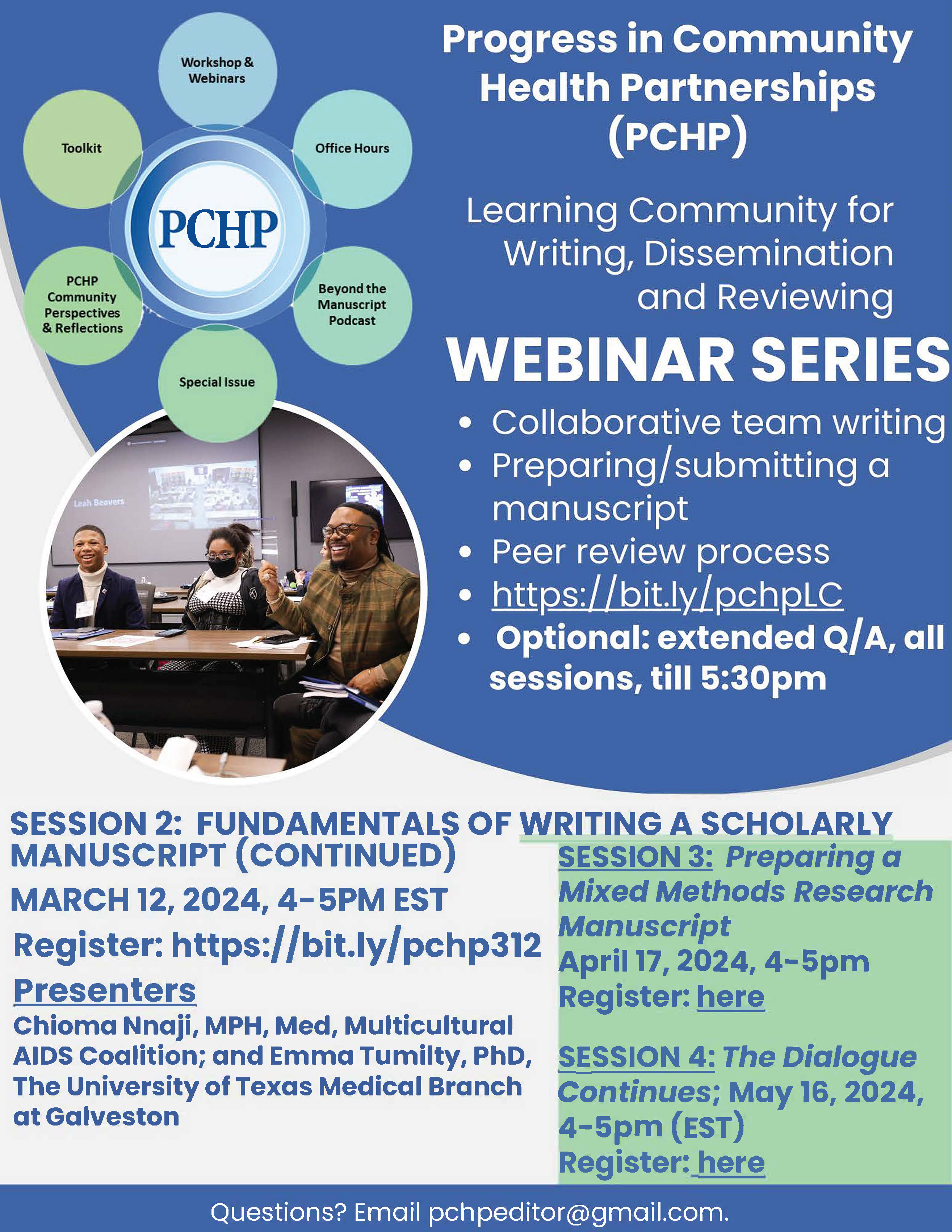
PCHP is pleased to announce a new webinar series in support of our Learning Community for Writing, Dissemination, and Reviewing.
Session 4: The Dialogue Continues
May 16, 2024, 4-5pm (EDT) with additional Q&A from 5-5:30
Register: bit.ly/pchp516
Presenters:
Tabia Akintobi, PhD, MPH, Professor and Chair of Community Health and Preventive Medicine; Associate Dean
Community Engagement; Principal Investigator and Director, Prevention Research Center; Director, Evaluation and Institutional Assessment
Morehouse School of Medicine
LaShawn M. Hoffman, Chair, Community Development; Civic and Public Health Consultant NPU-V
Morehouse School of Medicine
related


Explore
Hopkins Press Journals
